New mineral processing technology could help a Canadian junior unlock vital US domestic gallium and germanium production at an operating Utah fluorspar mine in a project backed by Department of Energy minerals and energy innovation funding.
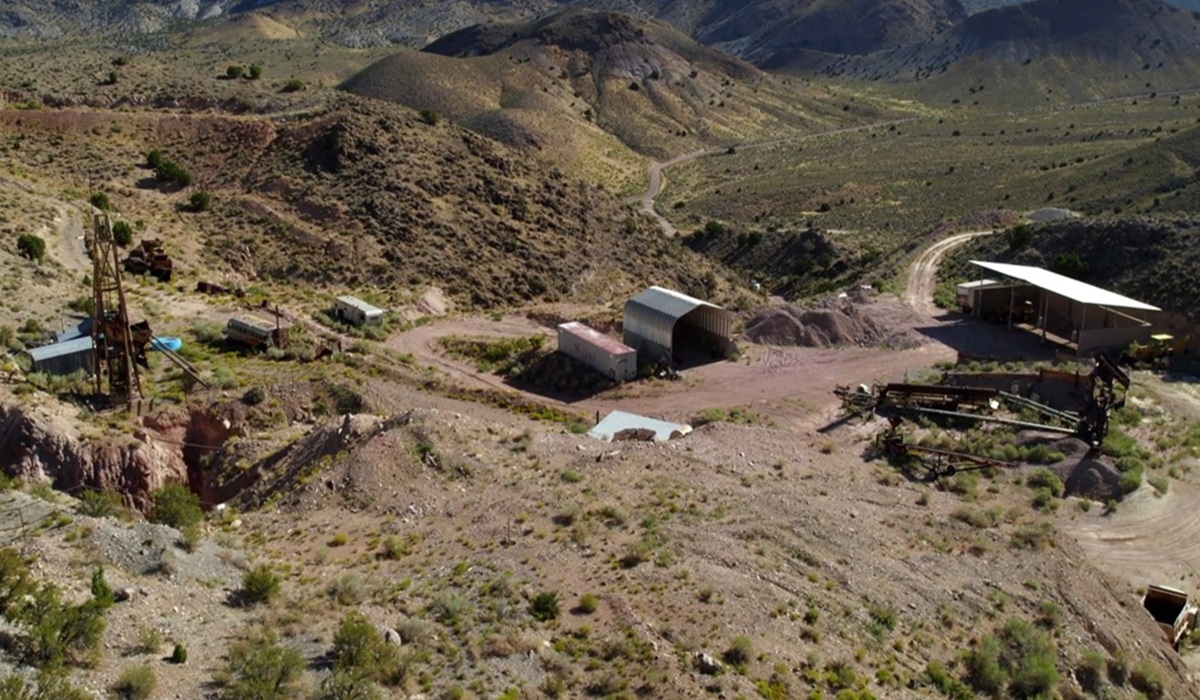
Vancouver-based Ares Strategic Mining this week signed a memorandum of understanding with Boston start-up Found Industries to assess the use of Found’s proprietary Direct Feedstock Extraction technology at the Lost Sheep mine in Juab County, which Ares acquired in 2020.
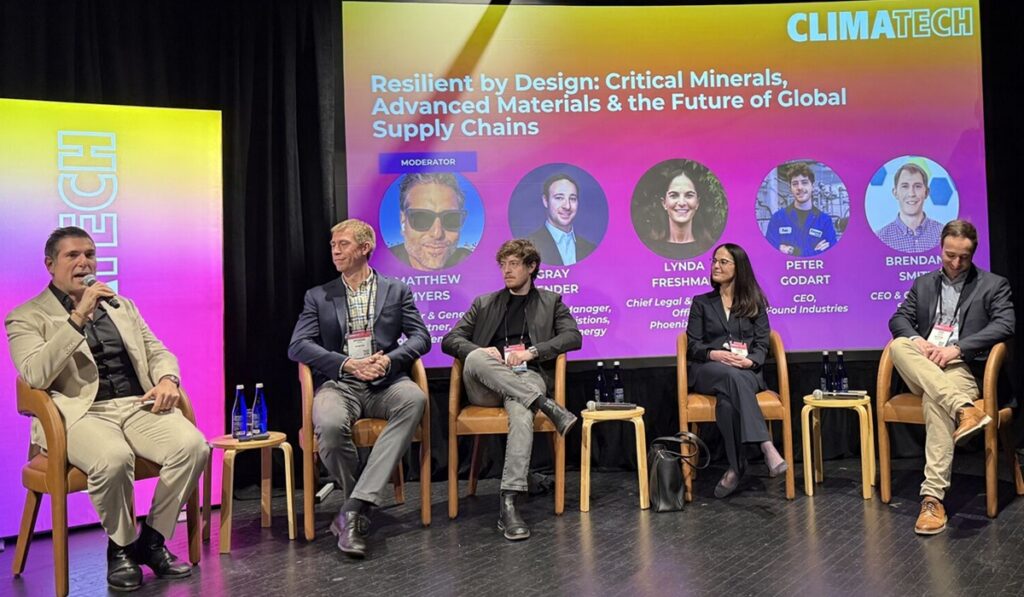
Found was started by Massachusetts Institute of Technology (MIT) mechanical engineering PhD and former NASA propulsion-fuel researcher Peter Godart, who invented an aluminium-water energy system in his Charlestown basement and then came up with a new way to extract gallium from Bayer liquor and other industrial feedstocks to “future-proof what we were doing” with aluminium.
Ares raised US$10.5 million of equity funding in 2024 to build a commercial acid-grade fluorspar, or acidspar, plant at Delta, near its Spor Mountain mine, and earlier this year announced a circa-$170 million US Department of Defense contract Ares CEO James Walker said was “a real game changer”.
“This secures us a rock-solid customer for every ounce of high-purity fluorspar we produce for the next five years,” Walker said at the time.
“It turns Ares from a junior mining company into a cash flowing profitable company realising earnings per share for the first time in our history.”
The US imports all of its fluorspar, which it classified as a critical mineral in 2018. It is an essential input into synthetic materials, iron and steel, ceramics and glass manufacturing, and aluminium refining.
It also lists gallium and germanium as critical minerals high on its list of metal imports. Gallium is integral to high-performance semiconductor supply chains while germanium is used in fibre optics, semiconductors and military applications. Ares has reported significant concentrations of gallium and germanium at Lost Sheep, including gallium grades in the hundreds of parts per million, and believes production at “industrial scales” might become feasible.
The world is currently mostly dependent on China as a source of both processed materials.
In April Found Industries and its subsidiary Found Metals were selected by the US Department of Energy’s Office of Critical Minerals and Energy Innovation for a $5.4 million program to recover gallium from domestic feedstocks.
Godart said the collaboration with Ares offered a path “to demonstrate how next-generation electrochemical refining can help transform a strategic US mine into a scalable, multi-metal critical materials platform”.
His four-year-old company, understood to have attracted more than $25 million of funding and now with about 20 electrochemistry, process engineering, mechanical systems, materials science and project development specialists on board, is exploring a range of partnership-based revenue models.
“Depending on the host site and feedstock that could mean a joint development agreement, joint venture, tolling model, feedstock supply agreement, offtake structure or integrated processing arrangement,” Godart told InvestMETS.com.
“The goal is to align incentives with the feedstock owner while letting Found participate meaningfully in the value uplift created by the technology — especially where our process is what turns a low-value or stranded stream into a critical metals production platform.
“Ares is strategically interesting because Lost Sheep is already a permitted domestic fluorspar asset, fluorspar itself is critical and there is potential to evaluate gallium, germanium and potentially other co-products from the same broader resource base.
“So we see it less as a single-mine bet and more as a strong example of the kind of feedstock partnership we want: domestic or allied resource, clear strategic relevance and a path to financeable deployment if the technical and economic validation works.”
Godart started looking at aluminium as an off-world fuel source at NASA and ultimately came up with a compact reactor to tap aluminium-fuelled power on Earth. Development of the catalysed aluminium water reactor made him more aware of US reliance on Chinese supply chains for catalyst materials such as gallium. Now, he says, a major focus is critical metals: “Vertically integrating our own supply chain … is table stakes now for companies that deal in physical goods. You need to be able to control your inputs. Focusing on metals improves the likelihood of success for our aluminium fuel business.”
Godart said projects such as Lost Sheep shaped as important pieces of Found’s critical metals roadmap.
“Another important workstream remains gallium recovery from Bayer liquor and other metal-processing streams where we believe there is a very large opportunity across US and allied alumina refineries,” he told InvestMETS.com.
“In terms of TRL and scaling this kind of project is valuable because it helps us show that our Direct Feedstock Extraction platform works with other key feedstocks.
“The broader thesis is that complex, dilute, historically under-monetised process streams can become critical materials resources when paired with selective, modular low-reagent extraction technologies.
“Critically, our process does not rely on typical Chinese-controlled toolchains, as is the case often with IX [ion exchange] and SX [solvent extraction], for example. The ARES work gives us another feedstock class, another industrial partner and a pathway to demonstrate multi-metal recovery in a mining context.”
On the broader opportunity set in front of the fledgling company, Godart said “US plus allied supplied chains” meant places with large existing mineral-processing infrastructure and strategic alignment around critical materials: Australia, Canada, Brazil, parts of Europe and the Middle East.
“We are especially interested in feedstocks where the host already has the industrial base and we can bolt on selective recovery rather than build an entirely new mine-to-metal supply chain from scratch,” he said.
“The immediate US market is constrained by the size of domestic metal-processing feedstocks but strategically it is extremely important because the US currently has no meaningful primary gallium production and is import-reliant.
“The larger addressable market is US plus allied gallium recovery from alumina refineries and other process streams, followed by expansion into germanium, indium, antimony, vanadium and other critical materials where the same platform logic may apply.
“We have identified hundreds of tonnes per year of near-term gallium potential in our partnership pipeline and multi-thousand-tonne-per-year potential across allied alumina refining capacity globally, which will be critical for tapping as the market is likely to continue seeing healthy growth due to semiconductor, magnet, defence, etc demand.
“Downstream, the value pool expands further via vertical integration into gallium, indium and germanium-based materials used in semiconductors, photonics, defence, magnets and advanced energy systems.”