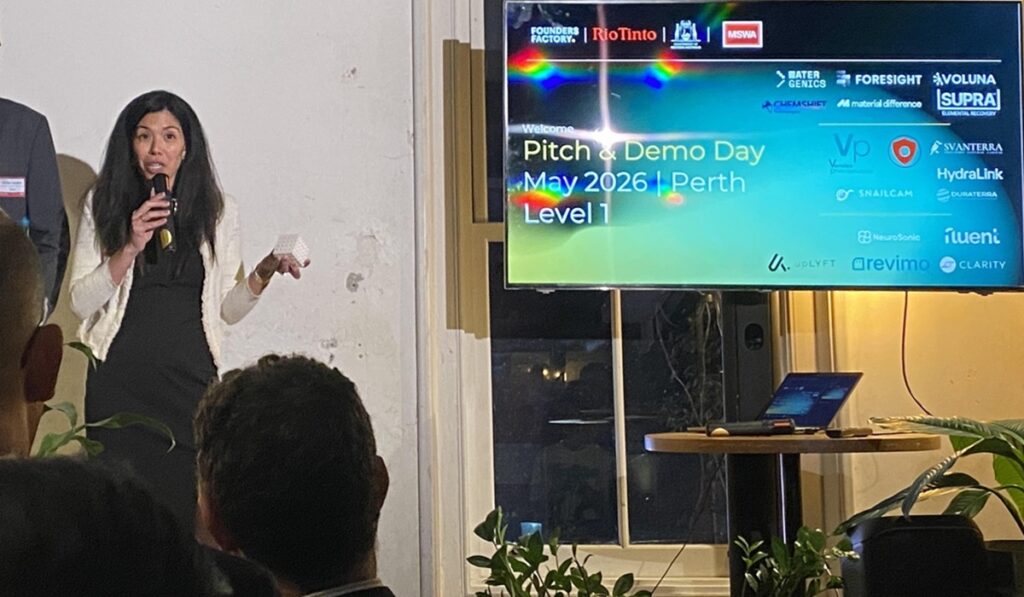
Rio Tinto Iron Ore CEO Matthew Holcz said the mining major’s use of a Cairns inventor’s bioelectrical seed treatment technology in its Western Australia rehabilitation efforts was one example of the “outstanding stories of innovation” emerging from its tech-accelerator partnership with Founders Factory and the WA government.
This week the Perth-based executive welcomed a dozen more start-up founders and accelerator program participants, including six mining-tech firms, to the home of mining heavyweights such as RTIO, BHP Iron Ore, Fortescue, Hancock Prospecting and Northern Star Resources. Rio, which recently marked eight billion tonnes of iron ore shipped from WA’s Pilbara region over 60 years, spent more than A$12 billion with WA suppliers alone last year. “The start-ups joining us tonight represent some of the very best and most promising mining technology innovators anywhere in the world,” Holcz said at a function in the Perth CBD.
London-based Founders Factory set up the program in 2024 with WA government funding and the input of Rio, one of the world’s biggest mining and metals companies and venture backer of firms such as Queensland’s Rainstick, whose Variable Electric Field seed treatment method is being applied in what Holcz called “on-the-ground trials” at Pilbara sites.
“This [Founders] partnership has already delivered tremendous success,” he said.
“The first 18 investments have secured more than US$120 million in follow-on funding from investors. That is just extraordinary.”
Holcz said Rio and Founders had set a “pretty high bar” for inclusion in the program, with each mining-tech cohort of six firms (24 in total so far) coming from a pool of about 500 applicants.
The program has attracted submissions from around the world. Mixing with miners, government officials and financiers this week in Perth were chemical, mechanical and aerospace engineers and data, environmental and geo scientists from the US, Canada, England and Germany. They were introducing Chemshift Technologies, Supra Elemental Recovery, Foresight Spatial Labs, Material Difference, Voluna and Watergenics to local industry and potentially investors.
Stephen Dawson, WA innovation and science minister and strong supporter of the Founders-Rio accelerator, said the connections were vital to the state’s efforts to elevate its profile as an innovation hub and create higher-value downstream industry around its traditional resource extraction base. In a period of fast-changing geopolitics and capital mobility, it was a two-way pitch.
“We want the best from around the world to come to Perth and help us with some of the challenges that we face in this crazy, crazy time,” he said.
Chemshift CEO Drew Moxon said the Canadian developer of lithium refining technology was naturally drawn to WA.
“About 40% of global supply of lithium products comes from right here in Western Australia but only 1-3% is actually refined into a battery-quality material,” he said.
“Chemshift is looking to change that with our technology.”
Supra CEO Katie Durham said the Texas firm was also “really excited to be here in Western Australia”.
“It is our hope we can deploy our technology here to increase the downstream refining capacity in this region and help unlock value from the tremendous assets that you have here,” she said.
“There is a saying rare earths aren’t rare they’re just difficult to separate. And this is the problem we are focused on solving. We have designed a next generation separation platform.”
Al Strange and Voluna co-founder Dr Aaron Olsen were “not your traditional miners”.
“I’m an aerospace engineer; Aaron is a physicist,” Strange said.
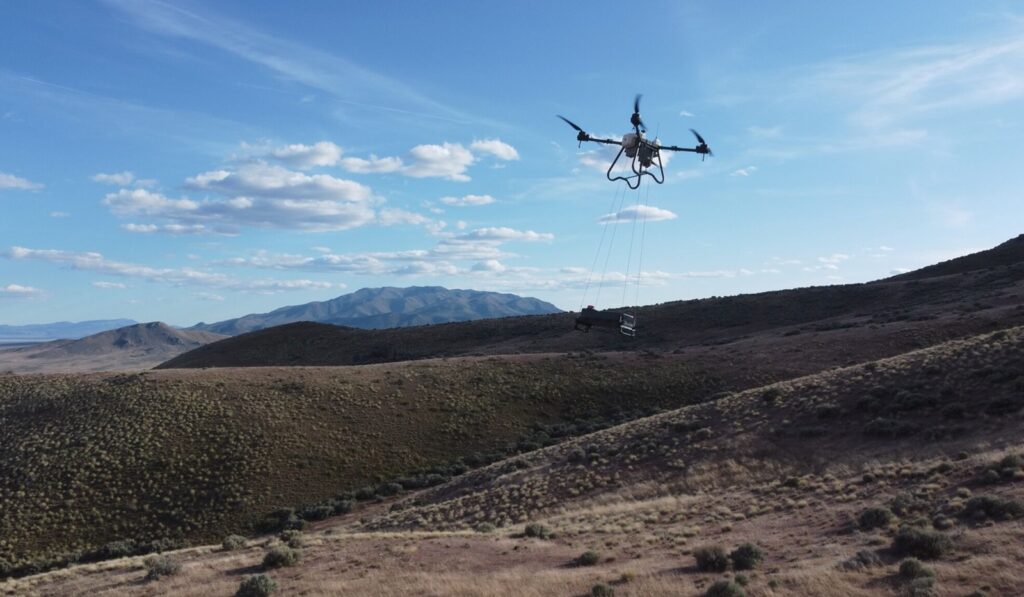
“We’re building airborne neutron activation systems to collect rapid geochemistry.
“Our airborne systems can collect geochemistry 100 times faster and for a fraction of the price of traditional manual on-foot approaches. We’ve already demonstrated this in northern Nevada just a week ago, with our data showing strong alignment to traditional lab ICP [inductively coupled plasma].
“We’re building toward international appointments in Brazil and Peru later this year.
“And ultimately we’re building the future geochemical data layer to power the next generation of discoveries.”
Cambridge stealth start-up Material Difference, said to have raised more than US$4 million of pre-seed funding, is similarly looking to change the mineral exploration game.
“We build explainable AI for orebody knowledge aimed at accelerating mine development, optimising production and reducing drilling costs and impact,” said co-founder Gabriel Yoong.
“The issue that we have found in the industry is the industry just does not trust – and rightfully so – black box AI solutions.
“We believe explainability is the bridge to finally allow geologists to leverage AI to make better but also just more defensible decisions. For the last 10 months we have shown across seven pilots that we can reduce drilling requirements by about 43% in exploration and development.”
Berlin-based Dr Liviu Mantescu knew how to connect with an Australian audience.
“Okay, so beer is made of water,” he began.
“We are coming from Germany – the country of beer.
“At Watergenics we like beer … but we follow the water.
“We use a special type of laser to pick up the vibration of molecules in the water … [to map] what is in aqueous solutions. Currently we are active in the lithium industry, in process water and wastewater alike.
“Next steps are for desalination.”
Government officials in Saudi Arabia are apparently impressed, though not with the beer talk.
More on the latest accelerator program cohort here: https://www.investmets.com/rio-tinto-founders-name-latest-accelerator-cohort/