Latest news out of the US on “clean energy’s next trillion-dollar business” is positive for Australian companies such as Australian Vanadium, according to a Perth investment firm.
Shaw and Partners says grid-scale batteries are “taking off at last”: “The US Department of Energy has selected flow batteries as the best option for long-duration and low-cost energy storage.
“The battery energy storage market is booming in the US and China as grid-scale installations are built to help grids integrate intermittent supplies of renewable energy.
“The Australian energy transition similarly requires both electricity generation and matched energy storage.”
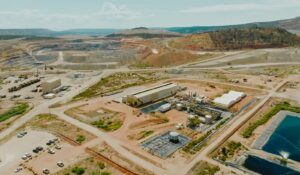
Shaw has a buy rating on ASX-listed Australian Vanadium, which is advancing an optimised feasibility study on its Gabanintha vanadium project in Western Australia’s Murchison region.
Australian Vanadium is also eyeing development of a domestic vanadium flow battery supply chain.
“The US Department of Energy’s Office of Electricity recently published a comprehensive report on different options for long-duration energy storage costs,” Shaw said this week in a note.
“The DOE established a long duration protocol that evaluated various energy storage technologies to achieve 90% cost reduction by 2030 for technologies providing 10-plus hours of energy storage.
“Flow batteries were shown to offer the best rate between costs and performance, as low as $0.06/kWh, versus lithium at $0.07/kWh and zinc at $0.08. Flow batteries are recognised as the safest alternative for large-scale, long-term energy storage. They are also fully recyclable.”
Vanadium’s use in batteries has grown from 1% of the market two years ago to more than 10% today, according to Shaw.
Battery storage capacity will grow 89%, or a further 14.3GW in 2024, according to the US Energy Information Administration.
Shaw says 12 US States now have grid energy storage targets, including 15GW in California by 2032 and 6GW in New York by 2030. “Meanwhile, the levelised cost of a four-hour duration battery energy storage facility was between US$126-177/MWh in 2023, down 73% from 2015 levels of $347-to-739/MWh,” it said.
“The Australian Energy Market Operator forecasts that the National Electricity Market will quickly follow the US and need 19GW of storage capacity by 2030, rising to 43GW in 2040 and 56GW in 2050. Current storage capacity is just 6GW.”
Australian Vanadium, which has picked up A$49 million in Australian Government Modern Manufacturing Initiative grants and WA government Lead Agency Status, has finished phase-one of its updated FS which outlined an expanded mineral resource, optimal mining sequence and preferred downstream processing sites.
Ongoing work on the optimised FS is being done in parallel with regulatory approval processes as well as offtake and financing talks.