Ivanhoe Mines will stick with its drill-bit led value-build focus and with Africa because “we’re good at Africa” as it looks to accelerate towards becoming a diversified mining heavyweight, according to the company’s president Marna Cloete.
“We’ve entered Angola and we’ve signed an MOU with the Zambian government, so we’re definitely staying in the region where we already operate,” she said this week in London.
“We know how to operate in Africa. But we’re also looking elsewhere and we’re always assessing opportunities.
“The problem we have is we’ve got great orebodies and great assets and when you want to add something to your portfolio you don’t want to dilute what you already have by adding something that’s second tier or third tier compared to what you already have.
“Every time we look at opportunities we always get back to the best thing we can do for our shareholders is organic growth and finding that next discovery that will add the type of value that Kamoa-Kakula did.
“We think we are not too far off from doing that in the Western Forelands [area].”
The circa-US$20 billion Ivanhoe has seen its value climb fivefold in the past five years on the back of delivery and expansion of the world’s major new copper mine at Kamoa-Kakula in southern Democratic Republic of the Congo. It owns c40% of Kamoa-Kakula in partnership with China’s Zijin Mining (39.6%) and the DRC government (20%).
It is also developing significant new platinum group metal and zinc mines in South Africa and DRC, respectively.
Ivanhoe announced a maiden discovery at Makoko in the 2650sq.km Western Foreland exploration area adjacent to Kamoa-Kakula in 2018 and is currently drilling to extend resources at Makoko, Kiala and Kitoko with a $40 million 2024 program.
It is adding a $1 billion smelter at Kamoa-Kakula amid its phase three growth program aimed at boosting copper concentrate output to more than 600,000 tonnes per annum from the current 450,000tpa-plus and bringing on the 500,000tpa blister anode copper plant.
The operation has a current projected life of more than 40 years.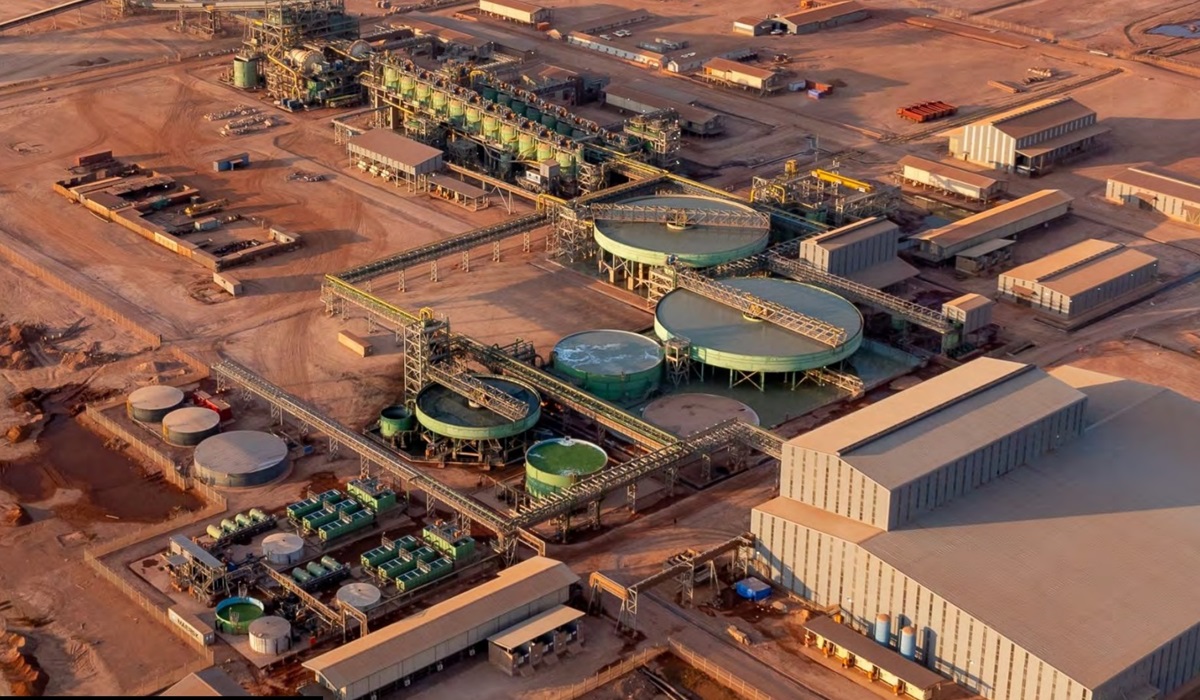
“It takes many years to find these tier one orebodies,” Cloete, president since 2020, said in reference to Ivanhoe founder Robert Friedland’s pegging of ground in the 1990s and the company’s discovery record since 2008.
“If you look at geological potential, Congo is the neighbourhood to be in.
“But I think it’s also a matter of sticking it out … when markets are depressed [and] budget cuts need to come in.
“The one thing about us as a group is we really do believe in value-add through the drill bit and we’ve stuck it out. And I think today all our investors are glad that they’ve been there with us on the journey.
“I think a lot of the major mining companies still need to get their heads around operating in certain jurisdictions in Africa.
“We’ve probably had all the majors visiting Kamoa-Kakula to come and have a look at what we are doing.
“We’ve definitely seen the Chinese as the first movers in some of these jurisdictions and that’s why we sit with the shareholder base we do, just because when we made the discoveries we did [they were the ones] willing to put some risk capital into developing what is now today the third largest copper producer in the world, Kamoa-Kakula.
“I think the sizzle on our steak is really the Western Foreland … because we get the feeling that we’re going to replicate what we did at Kamoa-Kakula in the foreseeable future.”
Cloete said Ivanhoe was aiming to develop a separate mine at Western Foreland and believed lessons learned at Kamoa-Kakula could speed progress.
“We’ve learned a lot about the geology over the past couple of years. We know what to look for,” she said.
“When we just started at Kamoa-Kakula we didn’t know what we were going to discover. We were sort of on the outskirts of Kolwezi. There was a known copper belt [but] it’s really a new type of discovery [sedimentary] that we made at Kamoa-Kakula.
“We now know what to look for … The secret elements in terms of finding that type of copper deposit. And that’s why we are staking ground in areas where we think we can replicate what we did.
“We also learned that we can build mines quite fast once we set our minds to it, and we’re quite a nimble organisation. So if I think about development in the Western Forelands, for example, it will be much quicker. It’s sort of a cookie cutter approach to what we did at Kamoa-Kakula.
“You have to think about Kamoa-Kakula and the Western Forelands as a mining district. It’s all really the same system, but it will be different mines.
“It will go much faster. Will it be like a one or two year horizon? Probably not. A five-year horizon; most definitely.”
Cloete welcomed “competitive tension” between China and the US in the region, spurred by the latter’s funding of rail upgrades through the Lobito corridor through Angola to the Atlantic coast: “The winner ultimately will be Africa.”
“Opening up infrastructure in Africa is great,” she said.
“The US is definitely starting to make the right noises when they start walking the corridors of the Congolese government. They’re starting to encourage the government in terms of transparency and anti-corruption, and they’re promising aid. They’re also promising infrastructure development.
“I think the US will have to make a big move and pour in significant amounts of capital to really make an impact and to really get a stronghold in countries like the DRC because that’s what China’s done and that’s the model that Africa’s used to, where there’s vast amounts of capital being given to these governments for infrastructure development and for access to assets.
“So I think once the US is ready to make those sort of big steps we will probably see that the economy gets a bit diversified away from China more towards the West.”