The founder of a Swedish firm aiming to disrupt a global mine explosives business built on Alfred Nobel’s 1860s invention of dynamite believes the industry needs more than incremental improvements to create a sustainable future.
“It needs new technologies and production approaches capable of delivering fundamentally better economics while improving resilience, scalability and investment attractiveness,” Hypex Bio CEO Thomas Gustavsson says.
“Over the past month I have written about explosive resilience and the challenges facing Europe’s commercial explosives industry.
“The response, combined with ongoing discussions across the sector, has reinforced a difficult but increasingly unavoidable conclusion: the industry is facing not only an innovation challenge, but a deeper structural issue around long-term value creation and the availability of aligned capital.”
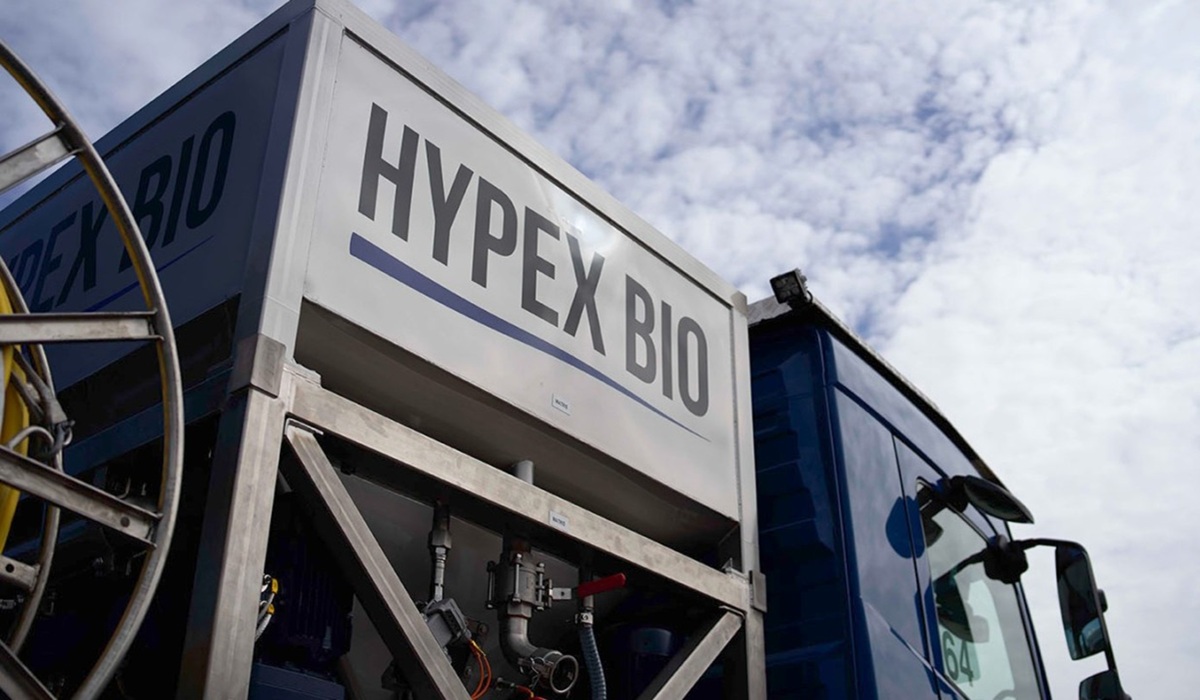
Gustavsson founded Hypex Bio in 2021 and in 2024 signed a five-year commercial deal with Swedish mining and metals company, Boliden. Scaling of the enterprise is being supported by South Africa’s Omnia Holdings, which paid about US$10 million for 10% of Hypex Bio in 2023 and said its hydrogen peroxide-based explosives could “transform the explosives supply industry”.
Gustavsson says commercial explosives suppliers have operated for decades within a “relatively stable framework”.
“Markets have matured, competition has intensified and products have become increasingly commoditised, often relying on a narrow set of bulk technologies and raw material pathways,” he says.
“As a result, many companies have focused on protecting and growing market share rather than fundamentally rethinking what the industry could become.”
Gustavsson believes while pricing pressure has built the sector hasn’t been strategic about innovation. Sector “infrastructure”, including strict regulatory demands, create high barriers to entry – disproportionately affecting smaller, innovative companies such as his.
“Combined with a limited pool of investors who understand the civil explosives sector and are willing to commit patient, long-term capital, the result is an industry that is operationally strong but strategically constrained,” he says.
“Unlike adjacent sectors such as energy transition, advanced manufacturing or defence-adjacent technologies, civil explosives have not developed a deep financial ecosystem.
“Few investors possess genuine sector expertise and even fewer understand the long investment horizons and infrastructure-heavy nature of the market. Capital allocation therefore tends to be cautious, fragmented and often misaligned with the industry’s transformation needs.
“This has consequences for innovation.
“While innovation continues it is frequently incremental rather than structural, focused on improving existing systems rather than redefining them.
“Yet the challenges facing the industry increasingly require more fundamental change.
“When competition is largely price-driven and innovation remains incremental, industries struggle to generate the surplus value needed to fund meaningful transformation.”
Gustavsson says hydrogen peroxide explosives offer a credible alternative pathway to dominant nitrate-based technologies.
“Combined with efficient, modular and relatively low-capital production systems, this approach has the potential to improve customer economics while supporting a more scalable and investable industry model,” he says.
“Equally important, we see an opportunity to bridge the gap between industrial reality and investor perception by demonstrating pathways to scalable innovation that can attract long-term capital.
“The key question is no longer how far existing models can be stretched, but how much value can be created across the system for customers, investors, and society.
“Those who rely solely on legacy technologies and incremental improvement risk operating within an increasingly constrained model. Those who combine industrial innovation with credible value creation and capital market alignment will define the next phase of the industry.”