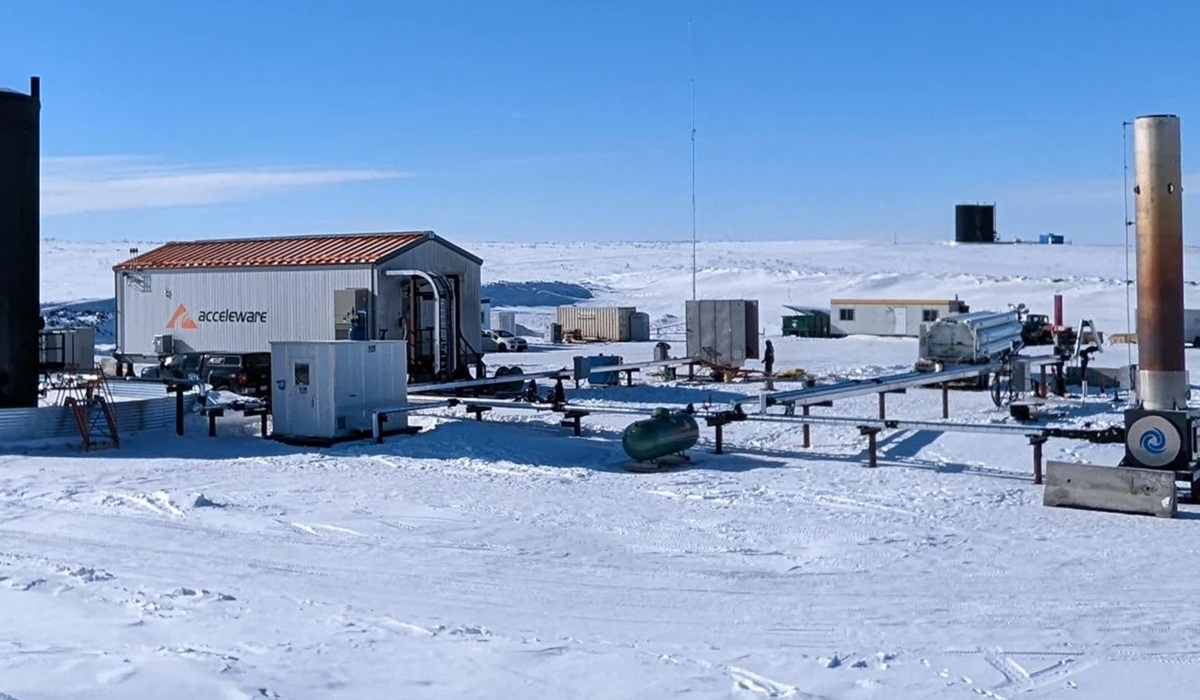
Canadian microcap Acceleware says it is exploring multiple options to secure the C$5-6 million it needs to build and demonstrate its “next generation” RF XL 2.0 electromagnetic (EM) heating unit.
The company said it was moving forward at a Saskatchewan farm-in location and had started a project approval process with the province’s energy and resources ministry as work continued in parallel “to secure federal and provincial government funding, and other financing to complete the project”.
“As part of the previously announced strategy to drive shareholder value Acceleware is securing a portfolio of potential sites – through farm-in agreements or asset acquisitions – for commercial demonstration of its next generation RF XL 2.0 technology,” the company said this week.
“Acceleware has signed two such farm-in agreements and is in detailed discussion with several additional companies regarding multiple assets in both Saskatchewan and Alberta in geological horizons known as the Lloydminster Mannville Stack.”
Calgary-based Acceleware is promoting its EM Powered Heat radio frequency power-to-heat technology as a potentially cheaper, environmentally-friendly heating solution for use in heavy oil production, mineral processing and industrial decarbonisation applications.
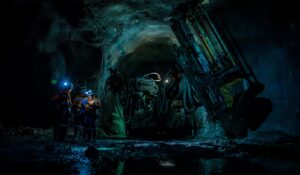
In Perth, Western Australia, this month to pitch the technology at a mining conference, chief operations officer Mike Tourigny said EM Powered Heat could increase copper, nickel, gold and other mineral production from processes such as heap leaching, through heap heating, and reduce energy input into drying and other processes by 50-75%.
“And it can reduce emissions by up to 100%,” Tourigny said.
“We’ve got our 2MW piece of the technology that was deployed in a heavy oil pilot with three tier-one oil sand operators.
“We see that mine scale heat is a major cost driver for operators and we want to change the way that heat is delivered.”
Acceleware management said this week discussions with “several potential industry and government funders” continued.
Conditional approval had been received from the Saskatchewan Petroleum Innovation Incentive for a transferable royalty credit equal to 25% of eligible project costs – including capital costs and the first two years of operating costs – from a future RF XL 2.0 pilot carried out in the province.
“Approval is conditional on entering into a project agreement with Saskatchewan Ministry of Energy and Resources within two years,” Acceleware said.
The company said worked was done in the March quarter with the International Minerals Innovation Institute (IMII) on a Phase 3A project for the design, construction and testing of a larger-scale prototype dryer for potash and potash fines. IMII members include BHP, Cameco Corporation, Mosaic Company, Nutrien, Fission Uranium Corp and The Uranium Corp.
“Also during Q1 2026, Acceleware completed a second paid feasibility study contract from BHP for iron ore drying,” management said.
“Follow-on work from this and the previous study is expected in 2026.
“The [company] began work on a paid feasibility study for heap leach heating, also from BHP, with work expected to be completed in 2026.
“Acceleware’s engineering team completed additional lab testing of a proof-of-concept amine RF regeneration system for carbon capture and natural gas processing, with positive results.
“Discussions on potential Canadian and European Union collaboration and partnerships to further develop the technology are underway.”
Acceleware generated revenue of $116,000 in the March quarter, compared with $431,000 in the same period last year.
Its share price has fallen by more than 42% in the past month, capitalising the company at about C$10.7 million.