The 50 entities best positioned to shape mining’s technology-led response to major technical, social, environmental and geopolitical challenges over the next decade generated about US$6.8 billion of sales to the industry in 2025. That might not sound like much.
But the top 50 global mining and metals technology suppliers have collectively lifted sales into the market by 73.5% over the past five years – at a fair 11.6% (CAGR) clip – showing that miners are indeed spending more on tech.
And, in line with market commentary from the CEOs of leading companies in the space, this investment is accelerating.
Software, sensors and analytics platforms are driving most of the current expansion.
However, the industry is only scratching the surface of key growth markets for tech companies and those that have built serious tech arms. The growth areas range from machine automation and control – new Komatsu partner Applied Intuition suggests a circa $1.6 billion mining-vehicle autonomy market can expand eightfold by 2031 – to wireless rock fragmentation and “orebody intelligence” technologies. “We are building [markets] that didn’t exist five years back. The potential is massive,” says Orica CEO Sanjeev Gandhi.
And if mining’s increased appetite for technology and stronger financial flows into the sector are the fuel propelling mining and metals tech into a new era, AI could be what really ignites sector expansion.
“Artificial intelligence is increasingly shaping how BHP operates,” the world’s biggest miner said at the start of 2026. The company’s chief technical officer Johan van Jaarsveld said: “AI is no longer a future concept for BHP. It is increasingly part of how we run our operations. AI is helping us understand our operations in new ways and act earlier, with greater confidence. What excites us is the scale of opportunity ahead.”
While AI will continue to be “baked into” mining tech, as one Australian expert puts it, there is no doubt the value it helps to unlock can be captured in new and perhaps different supplier-miner compacts.
Technology-led contracts focused on mobile fleet and orebody/waste management – combining smart machines and even smarter enterprise-level platforms – fixed asset management, and integrated versions of these systems, shape as gamechangers for major suppliers of tech, software and hardware, and even traditional contract services.
Smarter, more reliable and better utilised machines can underpin new performance-based deals that align technology company rewards with increased value being generated, however that is measured.
Similar to conventional fixed-asset engineering, procurement and management contracts, these technology-centric engagements could also see several suppliers form alliances to enable large-scale delivery of projects. Already, leading players in the nascent mining and metals technology space – including Orica, IMDEX, Seequent (Bentley Systems), Epiroc and ABB – are working more closely together to accelerate delivery of integrated hardware-and-digital platforms and systems.
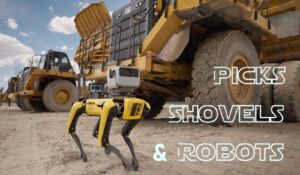
Decades of dialogue around the industry’s (rising) capital intensity being a non-negotiable is finally shifting. The “more, more, more” mantra is being replaced, in some quarters, by a less-is-more focus. Paul House, CEO of Western Australia-based IMDEX, says the industry’s approach to most of its problems – labour, escalating input costs and deeper, more complex orebodies that are harder to access – has been to buy a bigger pick, shovel or wheelbarrow.
“The traditional response – more drilling, more equipment – no longer delivers the returns it once did,” he says. “What’s needed now is a shift from volume-based productivity to intelligence-based productivity.
“That shift also changes how we think about time. In mining, information gathered early in the value chain behaves like a financial option: it gives you the right, but not the obligation, to make smarter decisions later. By front-loading key data acquisition – rock properties, structure, chemistry – you effectively purchase a call option on knowledge.
“If conditions change, that same data acts as a put option, protecting against downside risk.
“Better early information widens your future choices. Poor or late data narrows them. The companies that learn to treat data this way will redefine what productivity really means.”
The time for hockey-stick growth in mining and metals tech-sector sales is close, which is great news for the companies listed below.