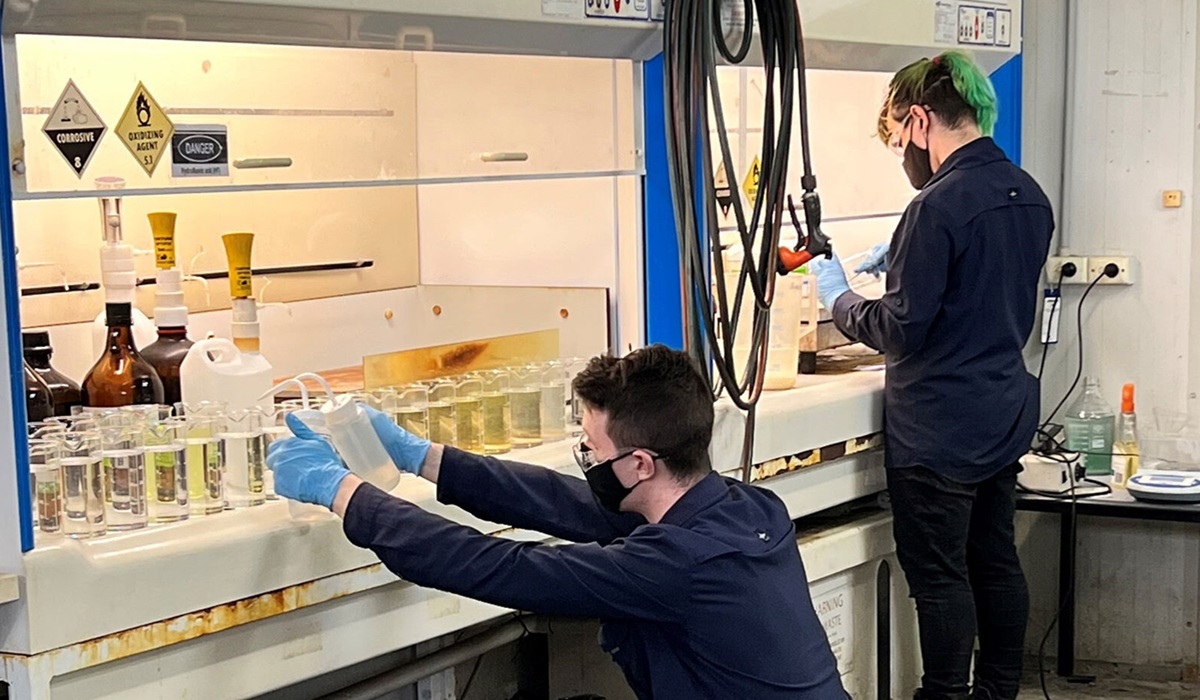
A Perth laboratory has produced platinum, palladium and rhodium from US-sourced recycled automotive catalytic converters in what has been described as a “historic milestone” for New York Stock Exchange-listed Lifezone Metals and its hydrometallurgical processing technology.
Lifezone says its Hydromet Technology has the potential to replace smelting for base and precious metals refining.
The company is working on the design of a planned automotive catalytic converters, or “autocats”, recycling plant in the US, with the work in Perth informing its blueprint criteria. It said one tonne of autocats materials processed over two years had shown recovery rates of more than 99% for platinum and palladium, and 95% for rhodium, could be achieved. Extensive test work had demonstrated the technology, with high leach extractions, efficient purification and separation steps, and reduction to metal products.
“Achieving the first-ever production of platinum, palladium and rhodium metal samples from spent autocats marks a historic milestone towards industrial implementation of Lifezone’s Hydromet Technology,” Lifezone CEO Chris Showalter said.
“Our customized flowsheet lays a strong foundation for the company’s overarching aspiration to become the US’ closed-loop, traceable and responsibly sourced critical metals solution.
“Our first module alone could produce 220,000 ounces of 3E PGMs annually, nearly matching the only significant primary PGM mine in the US. On rhodium specifically, ranked within the highest US supply chain risk category by the US Geological Survey, this is transformative, as we could produce more than five-times the current annual figure coming out of the country’s only producing mine, from a single Lifezone autocats recycling plant.”
Showalter said the US was structurally dependent on foreign sources for circa two million ounces of PGM annual imports, primarily from South Africa and Russia, “creating persistent economic and national-security vulnerabilities”. PGMs were essential inputs for US automotive emissions systems, defence and aerospace manufacturing, medical technologies and emerging hydrogen and fuel-cell applications.
Lifezone’s share price has risen by about 15% in the past week, capitalising the company at US$323 million. The shares are well down on levels reached six months ago.
The company acquired Western Australia-based Simulus Group and its Perth hydromet lab in 2023.
Lifezone said it was advancing engineering design and feasibility study work to enable a financial investment decision on the proposed US commercial plant in the current quarter. Mining and trading major Glencore has invested $1.5 million for a 6% stake in the project and has an option to fund 50% of project capex.
Lifezone chief technology officer Dr Mike Adams said production of platinum, palladium and rhodium from spent autocats highlighted the effectiveness of Simulus hydrometallurgical technology.
“The test work confirmed high recoveries of these critical metals to platinum, palladium and rhodium metal products, using our technology,” he said.
“Through completing an extensive 1179 tests, this step-change result supports our objective – to demonstrate that Lifezone’s Hydromet Technology can process and recover PGMs from responsibly sourced spent automotive catalytic converters in a cleaner and more efficient way than conventional smelting and refining methods.”