Contract mining and drilling companies working at more than 700 sites around the world in the first quarter of 2025 will grow their operating footprint inexorably over the next decade as geopolitics, technology and finance continue to reshape the global minerals and metals landscape in that period.
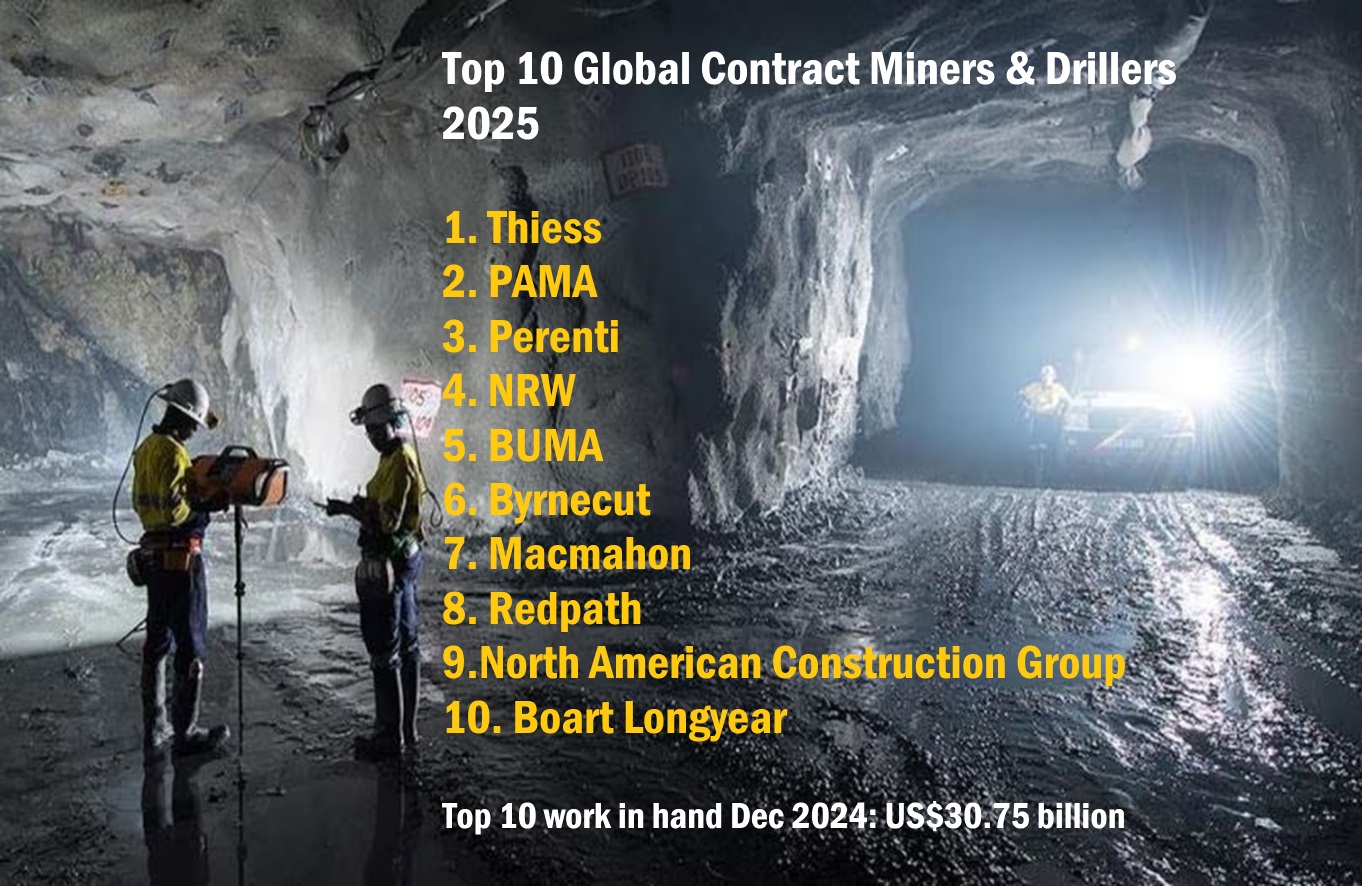
An exclusive, indepth examination of mining and drilling contractors that have led sector consolidation over the past decade highlights the rising geographical diversification of major players – going against the general tide of deglobalisation – and their growing scale. Thirty global leaders in the space generated about US$23.3 billion of revenues in 2024 and they should beat that in 2025 with circa-$24.1 billion. The world’s top 10 contractors had about $30.75 billion of work in hand at the end of 2024.
The top 10, based on 2024 revenues, are (1) Thiess, (2) PAMA, (3) Perenti, (4) NRW, (5) BUMA, (6) Byrnecut, (7) Macmahon, (8) Redpath, (9) North American Construction Group and (10) Boart Longyear.
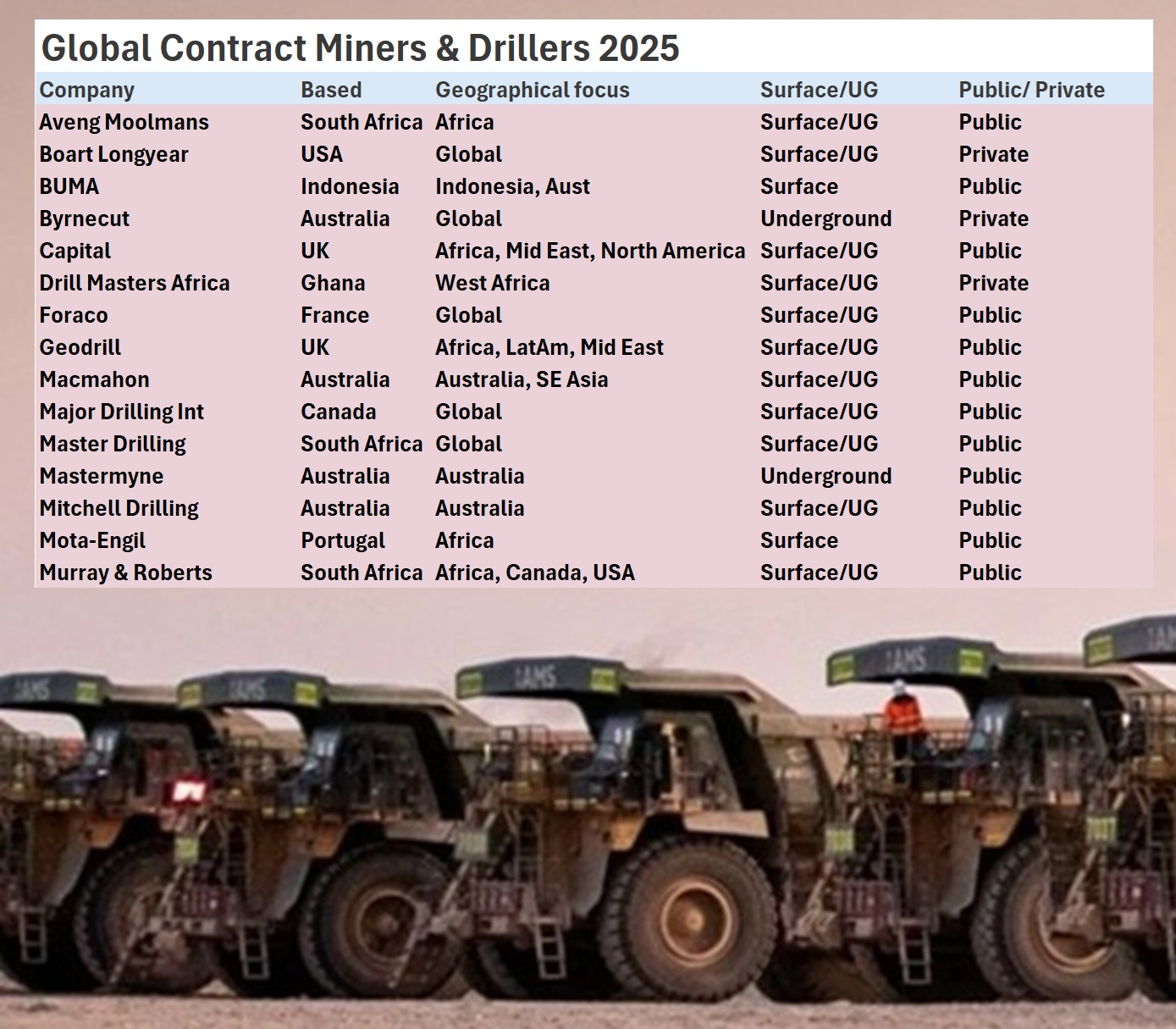
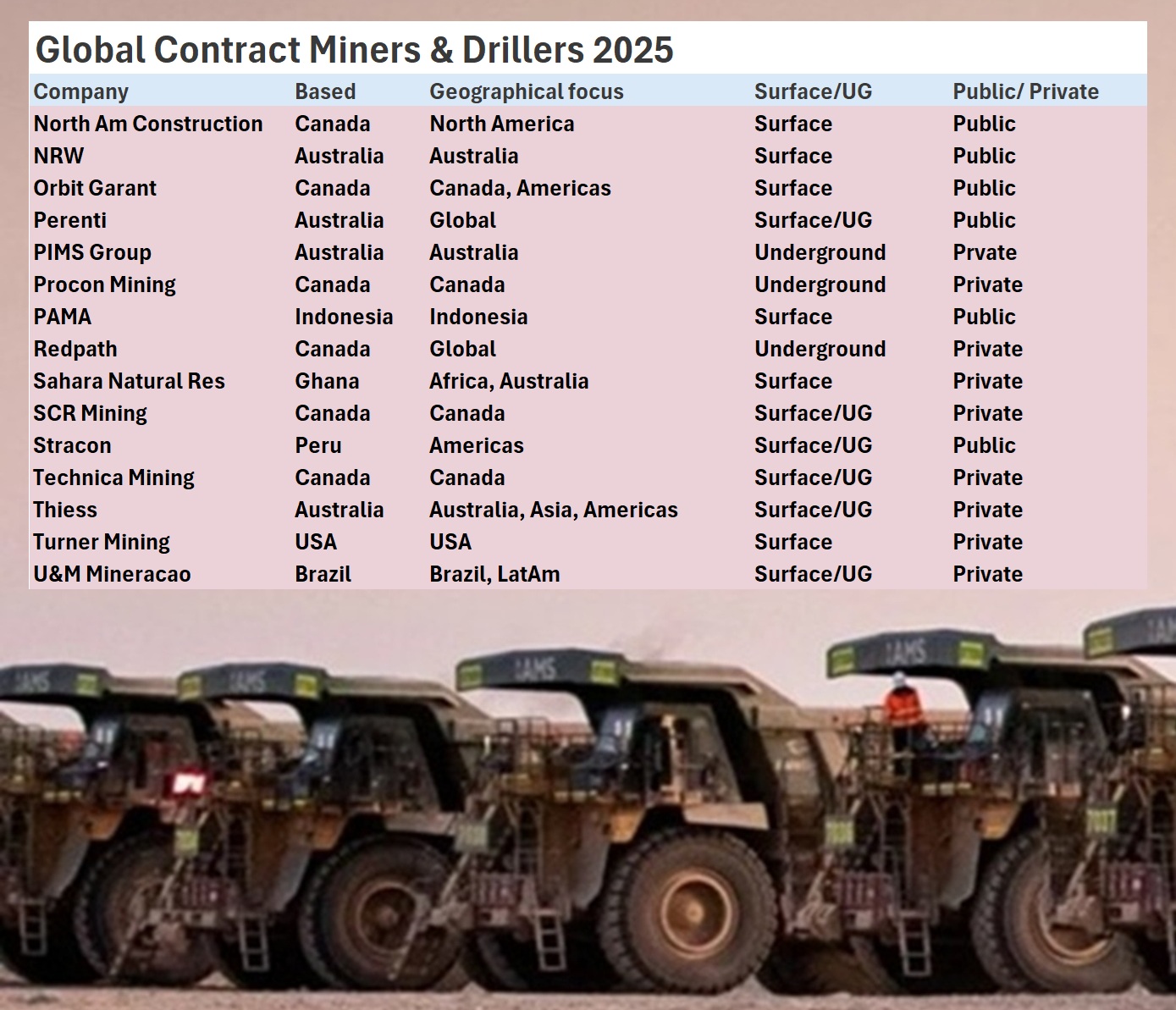
Australia, which saw a swarm of surface and underground mining contractors emerge in the 1980s and 90s, is home to five of the 10 largest contract mining and drilling groups in the world and eight of the top 30. Canada has seven of the top 30.
The world’s top contractors generally retain a heavy dependency on the gold and coal mining sectors that fuelled expansion of contract mining and drilling 40 years ago with one-third of today’s leaders having gold-heavy project portfolios and a similar proportion reliant on energy and steel-making coal. Copper is also prevalent and will become more so. Battery and energy transition commodities are nowhere near as important to mineral mining and drilling contractors today as gold and coal. By volume of material moved and sheer volume of activity, bulks such as coal, iron ore, bauxite and oil sand, and of course gold, will remain critical to growth and profits for contractors in the decade ahead.
But contract miners will be key actors in the mining industry transition being projected by firms such as McKinsey. Companies using advanced AI and other technology to identify and develop new resources will look to leverage contractors’ operating and asset management expertise and balance sheets to build new mines. Automakers and other mineral and metal offtakers will similarly look to contractors for mining expertise and specialised equipment.
Deep engineering and geoscience skills that are in increasingly short supply are available for hire through multi-billion-dollar contracting houses that have become more vertically integrated and are spending more than ever on technology and innovation. The 30 large mining and mineral drilling contractors listed here employed more than 130,000 people at the end of 2024.
While 14 of the world’s 20 leading publicly-traded mining and drilling contractors have seen their share prices drop in the first quarter of 2025 by an average of about 19% – and are mostly worth less than they were a year ago – the sector is generally projecting stable profits, positive cash flows and operating margins for 2025 in public reports. Improved capital management and, again generally, lower gearing levels have become strong suits of the leaders over the past 5-10 years.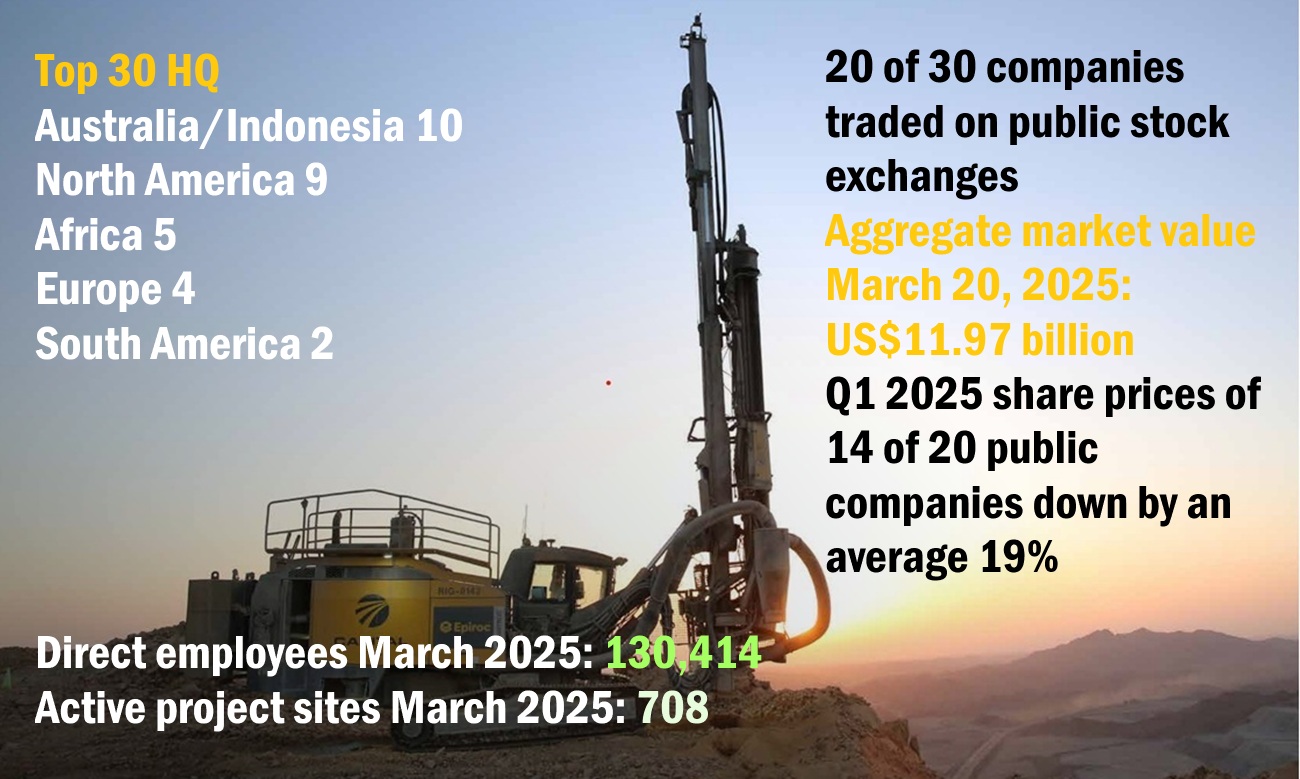
More than 40 significant mergers and acquisition transactions in that period, worth over $3.65 billion, have streamlined the leading group.
Twenty of the top 30 contract miners and drillers listed in this report are traded on public stock exchanges. They have a current market value of only about $12 billion (March 2025). That compares with the current value of New York-listed global oilfield services company, Schlumberger, or SLB, which is worth circa-$57 billion. Another major oil and gas technology and services group, Baker Hughes, is valued at about $44 billion.
Schlumberger’s 2024 full-year net profit of $4.46 billion on $36.29b of revenue compares with the marginal net profits of most of the 30 mining and mineral drilling contractors listed here that turned over c$23b last year.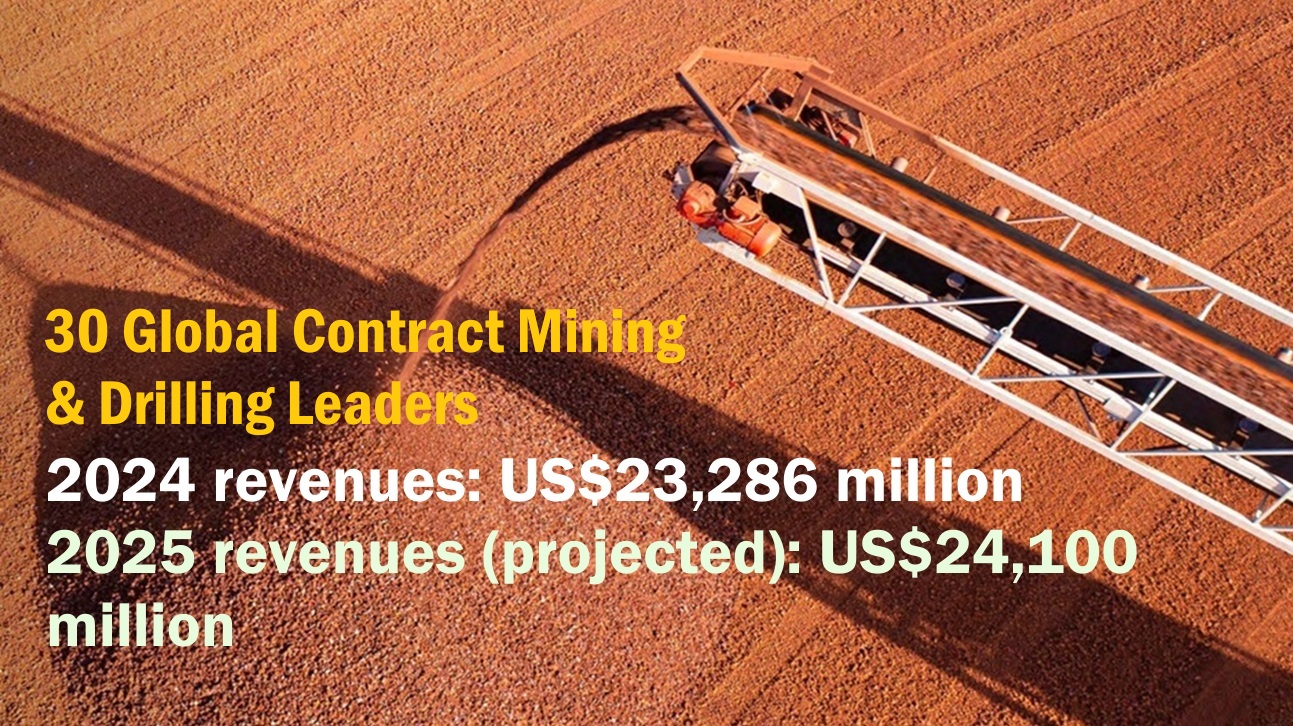
Convergence of the two industries seems inevitable. However, SLB is in no rush. CEO Olivier Le Peuch said earlier this year: “Global economic growth and a heightened focus on energy security, coupled with rising energy demand from AI and data centres, will support the investment outlook for the oil and gas industry throughout the rest of the decade.
“In our core business we are making unmatched contributions to the discovery, development and extraction of oil and gas reserves, fuelling global energy supply. We have the leading offering in digital.
“And we are pursuing a meaningful opportunity in new energy [minerals] and decarbonisation, where we have established a differentiated market position.”