Adelaide quantum technology company Teraglo has picked up A$2.4 million of Australian federal government funding to advance its work on an advanced sensor designed to measure recoverable rare earth elements in clay deposits.
The firm was named among eight recipients of Australian Department of Industry, Science and Resources Critical Technologies Challenge Program grants to test and demonstrate “solutions to market-led challenges of national significance using quantum technologies”.
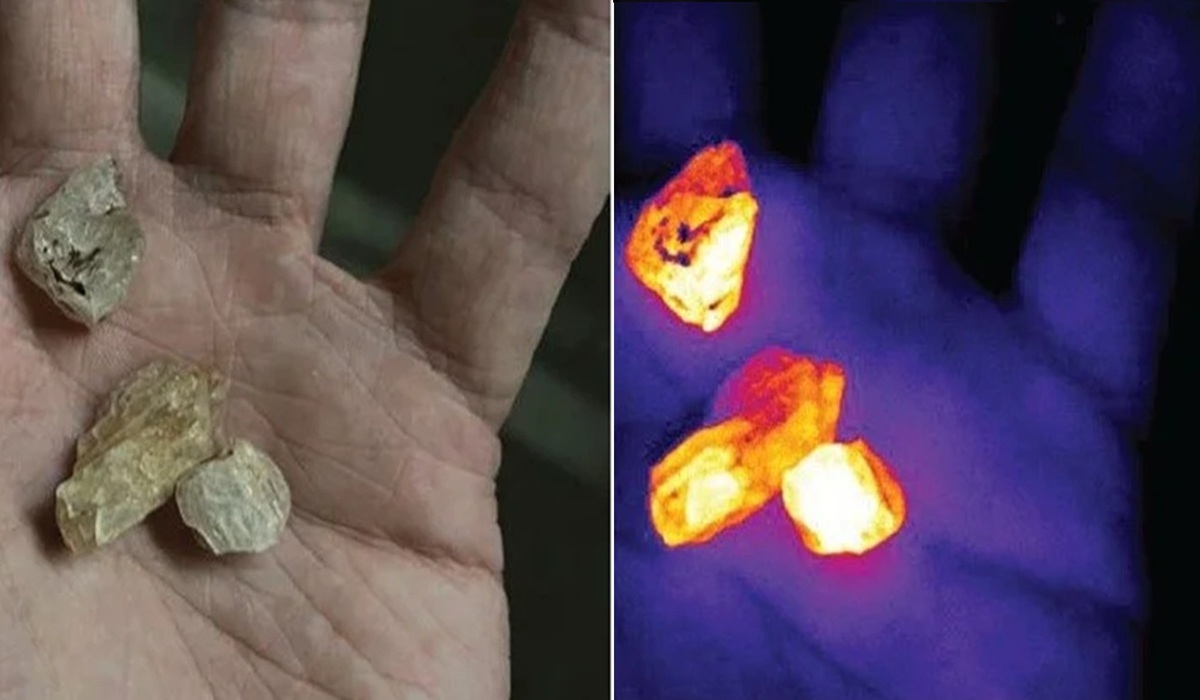
A spin-off of the University of Adelaide’s Institute for Photonics and Advanced Sensing (IPAS) formed with Loughan Technology Group, Teraglo is aiming to develop an industry-first mine-site sensor that can rapidly turn around REE sample results using its novel fluorescence technology and quantum artificial intelligence material sensing (QAIMS) hardware.
The Prescott Environmental Luminescence Laboratory (PELL) at the University of Adelaide worked with IPAS and the Institute for Mineral and Energy Resources to advance professor Nigel Spooner’s world-leading novel fluorescence research. Professor Spooner is credited as a pioneer in the use of new photonics technology for material detection, identification and quantification using “up-conversion fluorescence”, or UF. Since 2015 PELL has become a world leader in the development of novel approaches to fluorescence materials sensing.
Spooner says: “We see QAIMS as a platform for democratising access to high-quality materials data and reshaping how industries operate in the process.”
Loughan Technology Group, established in 2000 by American entrepreneur and tech investor Robert Loughan, formed a partnership in 2024 with the University of Adelaide to commercialise novel fluorescence technology and advance real-time detection of minerals, hazardous materials and chemicals.
TeraGlo has configured QAIMS portable and online analysers for a range of applications, from hand-held scanners to conveyor belt, slurry and ore sorting analysers. The company says novel fluorescence provides unique imaging capabilities. “Most compound phase detection, or mineralogy, techniques provide only a spectral response. NF as an imaging technique can provide full sample morphology including shape, form, size and structure,” it says.
The Critical Technologies Challenge Program, aligned with Australia’s National Quantum Strategy, aims to nurture domestic quantum capabilities and strengthen the country’s high-tech manufacturing base.