Iron ore major Fortescue is closing on the launch of a dedicated training centre for industrial electricians in Perth as it seeks to head off a dire shortage of electrical tradespeople in a few years’ time.
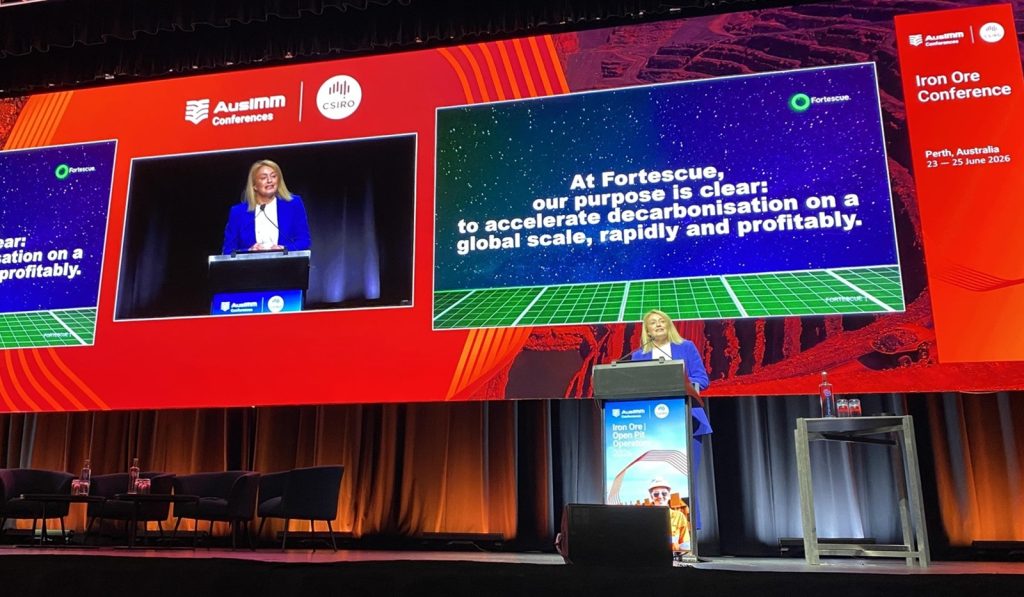
Speaking at a conference in the Western Australia capital, the company’s integrated operations director Katie Charuga said electrical capability was “mission critical” as Fortescue moved towards its 2030 “real zero” decarbonisation targets at its Pilbara iron ore operations. It could need about 1800 electricians as work on the US$6.2 billion program peaked in 2028.
“We recognise that the skills shortage is an absolute delivery risk,” Charuga said at the AusIMM 2026 Iron Ore and Open Pit Operators Conference.
“Demand is accelerating as we build out our energy systems and electrify our mining fleet to reach our real zero target by 2030.
“Fortescue alone is likely to hire one in every 21 electricians in Western Australia.
“Electricians, electrical engineers [and] technicians will underpin the entire transition and there will be multiple industries competing for this workforce.
“Fortescue is expanding apprenticeship traineeship programs, graduate and vacation programs, and First Nations pathways, including our VTEC [Vocational Training and Employment Centre] training program.
“We’re investing in our own training too and we’ll very soon be officially launching our very own electrical training centre … that will bring our electrical training in house to help us meet our growing demands.”
Fortescue, the circa-A$60 billion ASX company producing and shipping about 200 million tonnes a year of iron ore from three Pilbara mining hubs and a 760km rail network, is aiming to replace more than 800 items of diesel-powered mining and ancillary equipment with electric alternatives by 2030.
The diesel equipment reportedly used about 680 million litres of diesel last year and Fortescue wants to eliminate c1 billion litres of diesel-equivalent fuel use in the next five years.
“In the next 12 months alone we expect around US$100 million in benefits from our decarbonisation initiatives,” Charuga said.
“Our strategy is built on three pillars: an electrified mining fleet, an integrated renewable independent energy network and a technology ecosystem powered by autonomy, analytics and AI.
“By 2028 our Pilbara iron ore fixed plant operations will be powered by renewable energy, supported by batteries and zero emission technologies.
“For our industry that is transformational – for emissions, for resilience, for energy independence and for long-term competitiveness.
“To make it possible, Fortescue is building one of the largest renewable energy networks in the world: 1.2 gigawatts of solar, 800 megawatts of wind, four-to-five gigawatt hours of battery storage; all connected by 620km of high voltage transmission lines. Every solar panel, every wind turbine and battery strengthens our energy security. Every megawatt of renewable energy reduces exposure to fuel price volatility, geopolitical disruption and supply chain risk.
“Our battery electric fleet is supported by a growing charging network, including a 6.6 megawatt fast charger which is capable of charging full trucks in 30 minutes.
“This isn’t any more about testing technology, it’s about building the world’s first large-scale real zero mining operation in real conditions at real scale in the Pilbara.
“We’re already one of the world’s most efficient mining operations but now we’re reimagining how mining will operate in the future.”
Charuga said without coordinated action workforce shortages “could slow our decarbonisation journey as well as the rest of Australia’s”.
“As we build out our green grid, electrify our fleet and deploy our new digital technologies, new opportunities are emerging for our workforce across electrical trades, autonomous operations, renewable energy, AI and digital systems,” she said.
“Resilience is not just about assets, it’s about having a workforce that’s adaptable, skilled and ready for change.”