Privately-owned US firm EnergyX will look to raise billions of dollars of finance over the next few years to fund two large-scale direct lithium extraction (DLE) projects and build a “Battery Mecca” near Texarkana on the Texas-Arkansas border. “X marks the spot”, is the company’s promo line for an old US Army munitions site being turned into a base for the “biggest lithium company in the world”.
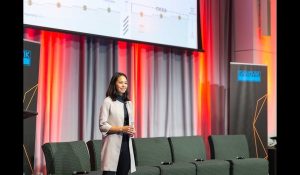
“We’re trying to build the biggest lithium plant in the world, which is going to happen in the next two years,” EnergyX founder and CEO Teague Egan told guests at the launch of the company’s 250-tonnes-per-annum (lithium carbonate equivalent) demonstration facility at the former Lone Star army property.
Egan’s ambitious plans and timeline for turning EnergyX into a technology-led lithium (and other battery materials) heavyweight were spelt out publicly at the Texarkana launch, where the former venture capital fund starter and early Tesla investor drew parallels between EnergyX and SpaceX’s need to build supply chains from the ground up to support greenfields industry.
“This [commercial DLE] technology doesn’t exist today,” Egan said.
“There are other people trying to do it … Not as good as us.
“Our costs are the lowest, our efficiencies are the highest [and] our recovery rates are superior.
“While other people are just making technology they don’t own their own resources like we do.”
GM Ventures, South Korean steelmaker POSCO and Boston VC firm Eni Next are among the early investors who have allowed EnergyX to spend about US$30 million on the Texarkana facility, ground purchases that have given it significant surface exposure to the major Smackover hydrocarbon formation now seen as America’s primary lithium brine source, and advance the Black Giant lithium brine property in Chile.
The 250tpa Texas facility allows EnergyX to demonstrate its proprietary DLE technology and generate product samples from Smackover brine. Egan wants to rapidly scale the extraction and refining processes on the back of that validation, with a circa-$1 billion investment planned to establish a 50,000tpa lithium hydroxide operation he claims can be competitive operating cost and capital intensity-wise with established lithium players including Chinese DLE producers.
A proposed $725 million, 52,500tpa LCE project at Black Giant in Chile’s Antofagasta region was the subject of a positive pre-feasibility study last year.
A domestic operation and vision for downstream industrial activity has even greater appeal given current US federal funding proclivity and an increasing national need for local economic stimuli. EnergyX claims “Project Lonestar” can create more than 3000 well-paid jobs and billions of dollars of regional economic impact over the next decade.
Egan wants to be first to demonstrate Smackover DLE commercial credentials, and scale, in the process highlighting advantages of EnergyX’s technology and approach, as he moves toward an inevitable public-market entry for the vehicle.
“I think it [first 12,500tpa train] will be the first commercial DLE plant in the United States,” he said.
“We will see how quickly our neighbours can move.
“Two years after that [2030], the 50,000t plant. We want to scale to 100,000tpa by 2032, assuming we acquire the appropriate [Smackover formation] acreage.
“We’re also thinking beyond lithium. We want to go into cathodes and batteries with partners.
“And we’re calling this the Battery Mecca. In 2027 we plan to start piloting cathodes with the lithium that’s produced right here in this plant. In 2030 we build the Battery Mecca … with cathode partners and battery cell partners.
“We will look to bring on a cell partner in 2029 as well as partnerships with polymetallic nodule producers that will give us all the balance of base metals and materials that are used in high energy-density batteries, other than lithium … The nickel, the cobalt, the copper and the manganese.”
Egan said at the launch EnergyX had engaged offtake partners for Lonestar, without naming them. The company said last year a signed letter of interest from the US Export Import Bank (EXIM) for $690 million in project finance support for Black Giant underscored “growing investor confidence in the company’s proprietary lithium extraction technologies and project execution capabilities”.
“I started this company [in 2018] when I was 28 years old,” Egan said.
“People had every right to doubt me – an outsider [with] no experience in lithium; no experience in mining, no experience or background in chemical engineering [and] no track record of building a plant like this. But we have come a long way and today I’m beyond excited to show you the biggest DLE plant in the US, on top of a world-class lithium deposit.
“We have the brightest engineers, the brightest scientists, the best operators and the best team that made this all possible.”
Egan said lithium demand which had grown from circa-120,000 tonnes in 2010 to 1.3 million tonnes now could explode to 6-10Mt by 2050.
“In 2011 there were maybe 5000 electric vehicles … In 2025 there were 20 million EVs sold and in 2026 that number will be even bigger,” he said. As well as EVs. energy storage, drones and humanoid robots “will need hundreds of thousands if not millions of tonnes of lithium”.
Traditional, highly wasteful production methods were the only commercial methods “until today”, he said. From the outset EnergyX was focused on “how we could move away from evaporation ponds to a 21st century technology idea”.
A first-principles engineering approach included a focus on modular process design and prefabrication of key components.
“Once we developed the technology that meant owning the resource for vertical integration upstream and controlling our supply chain,” Egan said. “We make all of the membranes, all of the resin that you will see that fills our columns, the solvent extraction that goes into our solvent extraction units.
“We are vertically and horizontally integrated to achieve, ultimately, the lowest cost.”
EnergyX is among an increasing number of start-up firms – including the likes of KoBold Metals and Mariana Minerals – trying to disrupt traditional mining companies and business models that have shaped the industry over the past 50 years.
“I was just with the CEO of Rio Tinto,” Egan said.
“He brushed me off.
“Wait until he sees our demonstration plant.”