Co-founders of US-based Phoenix Tailings say a US$500 million loan from the US Department of War will help it deploy its MIT rare earth separation and metallisation technology at scale and create the “backbone of a resilient Western rare earth supply chain”.
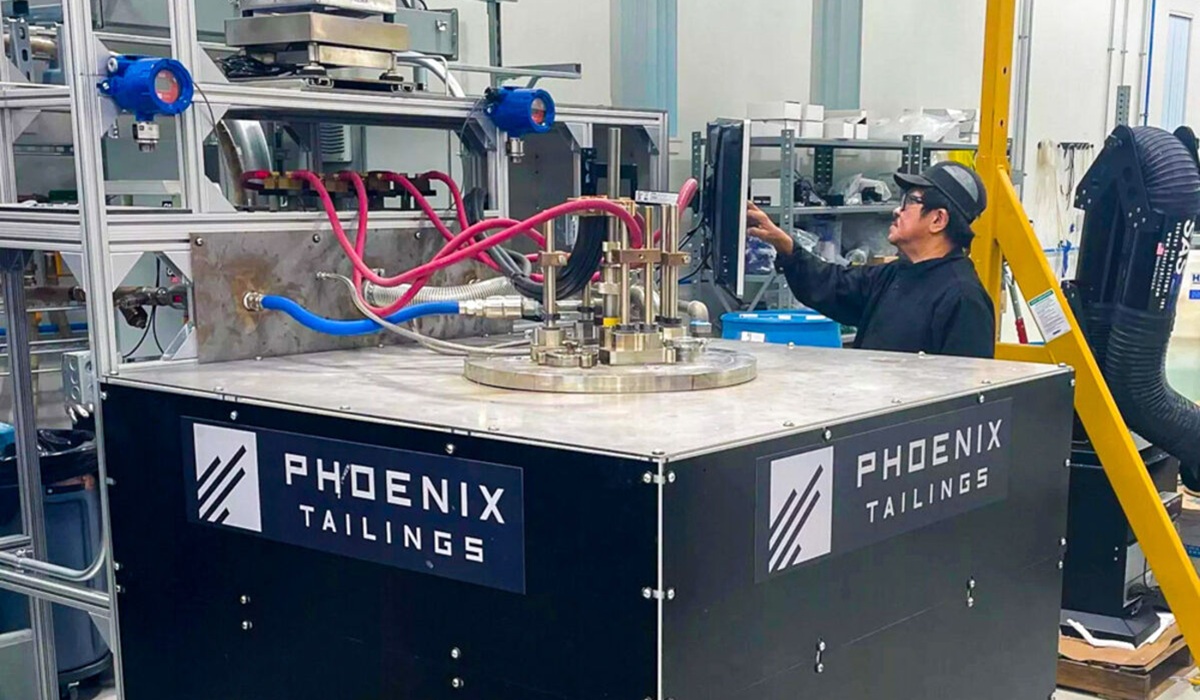
The 2018 Massachusetts Institute of Technology spinout has raised more than $150 million of private capital to fund testing and development of its processes for recovering metals from mine tailings and electronic and other product waste. Phoenix has reportedly built a 200 tonnes per annum plant in Exeter, New Hampshire, to demonstrate its ability to separate light and heavy rare earths from various feedstocks.
Co-founder and chief technical officer Tomas Villalon said the US DoW Office of Strategic Capital “strategic investment” would enable Phoenix to “deploy the infrastructure America has lacked for decades while proving that advanced technology can deliver a safer, cleaner and more competitive rare earth industry”.
The company’s proposed large-scale “Freedom Facility” is now said to have circa-$1 billion of funding behind it.
“Supporting domestic processing for critical minerals and rare earths is a key focus for OSC and the rare earth midstream processing capabilities that Phoenix Tailings represents are key shortage areas that need to be rapidly addressed,” Office of Strategic Capital director David Lorch said this week.
Lorch is senior adviser to US deputy secretary of war, Steve Feinberg.
“We are pleased to support Phoenix Tailings in building the company’s Freedom Facility, which will represent an important step in strengthening the full mine-to-magnet supply chain in the United States.”
Phoenix co-founder and chief commercial officer Anthony Balladon said a midstream rare earth supply chain was the critical link between feedstock producers such as mines and recyclers, downstream manufacturers, and end users including makers of American defence systems, advanced manufacturing, energy infrastructure and consumer technology.
“By creating a midstream facility like this we are empowering virtually every part of the market and rebuilding the rare earth sector as a truly collaborative industry,” Balladon said.
“We will ensure end customers get access to the rare earth metals they urgently need while helping mines and recyclers get up and running by purchasing their output, which would otherwise have to move through other nations.”
The International Energy Agency said in its Global Critical Minerals Outlook 2025 report China was the major global refiner of 19 out of 20 important strategic minerals with an average market share of 70%. It said this concentration of midstream processing had intensified in recent years.
“There has been a proliferation of export controls on key materials and technologies in recent years,” the IEA said.
“New restrictions on rare earth elements and lithium-ion battery supply chains underscore once again the vulnerabilities and risks.”
The IEA said rare earths supply was among the least geographically diversified among all critical minerals.
“For rare earths used in magnets for various industries – notably neodymium, praseodymium, dysprosium and terbium – China accounted for around 60% of global mining output in 2024, followed by Myanmar, Australia and the United States,” the agency said.
“China’s dominance is even greater in the separation and refining stages, representing about 91% of global production, with Malaysia a distant second.”
Phoenix Tailings says its Freedom Facility will produce light and heavy rare earth metals from a diverse range of feedstocks, including concentrates, recycled materials and secondary sources.
“The facility is designed to utilise domestically controlled technology and intellectual property, mitigating reliance on foreign entities of concern,” the company said.
“Initial operations are targeted for 2028.”