Canadian junior District Metals Corp says a scientific collaboration with the Centre of Advanced Mining and Metallurgy at Sweden’s Lulea University of Technology can help advance its understanding of Alum Shale pyrite at its major Viken polymetallic project, said to host the world’s largest undeveloped uranium resource.
District’s 2026 preliminary economic assessment outlined a US$876 million development capable of producing circa-3.3 million pounds a year of uranium oxide, 16 million pounds of vanadium pentoxide and 250,000 tonnes of sulphate of potash for at least 13 years.
The site is said to also have molybdenum, nickel, copper, zinc and other resource minerals.
Pyrite is the main sulphide mineral in the district’s prominent Alum Shale Formation and is known to be associated with copper, zinc, molybdenum, nickel, cobalt and deleterious elements such as cadmium and arsenic.
Pyrite concentrate has previously been investigated as a feedstock for sulphuric acid production in Sweden.
District Metals wants the Lulea University research to inform its upcoming environmental studies, including the design of environmental management protocols to counteract potential acid rock drainage. The project would help train young geoscientists in Sweden on the geology and mineralogy of the Alum Shale Formation.
“Partnering with Lulea University of Technology’s Swedish School of Mines gives us an opportunity to build a more detailed understanding of pyrite in the Alum shales on our Viken property,” District CEO Garrett Ainsworth said.
“The research will help inform our work on mineral processing and environmental management, while supporting the development of early-career geoscientists in Sweden.
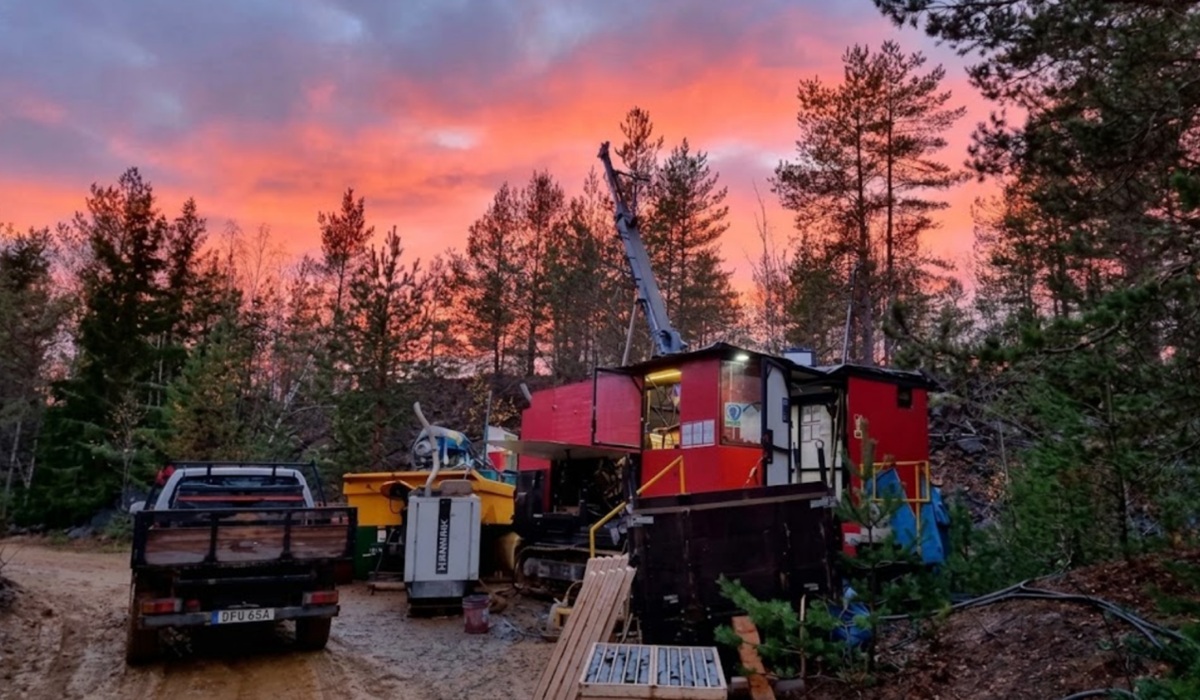
“We’re pleased to contribute drill core and analytical support to this important collaboration.”
Associate professor at LTU and director of the university’s advanced mining centre, Nils Jansson, said the collaboration would advance “state-of-the-art analytical workflows for complex materials”.
The research project aims to investigate relationships between deformation microstructures and trace-element distribution in shale pyrite and assesses implications for element deportment, mineral processing routes and environmental management.