Toronto-listed Buffalo Potash Corp will advance work on its proposed US$639 million Disley potash project about 50km northwest of Regina in Saskatchewan, Canada, after raising $10.5 million of equity funding.
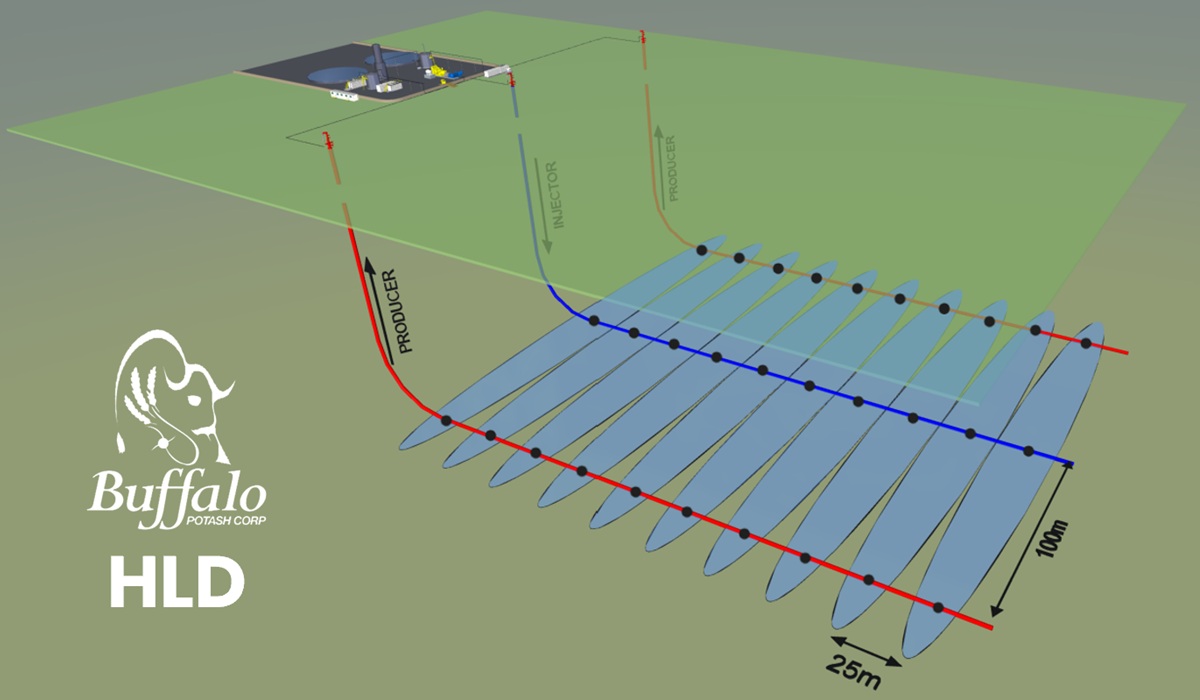
The company says it will use some of the funds for the downhole infrastructure buildout of its planned initial production module. It wants to take a “modular approach to selective solution mining” with its patented Horizontal Line-Drive (HLD) technology.
“The conventional approach to building new potash supply – enormous upfront capital, decade-long timelines and the budget escalations that have come to define large greenfield development – is reaching its limits and the industry knows it,” Buffalo CEO Steve Halabura said.
“We believe that creates an opening for a smarter model and we believe Buffalo Potash is positioned to deliver it.
“With this oversubscribed financing now fully closed we have the financial strength to turn our focus to operational execution and excellence as we advance toward becoming the next major supplier of global potash.
“Our goal is to reshape the future of global supply with a mining methodology that draws on techniques used every day in the oil and gas sector to deliver production that is more sustainable, more capital-efficient and more scalable than what the industry is used to.”
Halabura said Buffalo was aiming for an early 2027 start to production via the initial module.
Disley is immediately east of K+S’s Bethune potash solution mine and north of the Mosaic Belle Plaine potash solution mine, both among the world’s largest producing potash solution operations. Buffalo maintains it’s a good neighbourhood for solution mining.
Its April 2026 preliminary economic assessment outlined a plan to produce up to one million tonnes per annum of K62 granular-grade muriate of potash (MOP) and 125,000tpa of K62 soluble grade MOP at a circa-$55/tonne MOP opex, for 50 years or more on current measured and indicated resources.