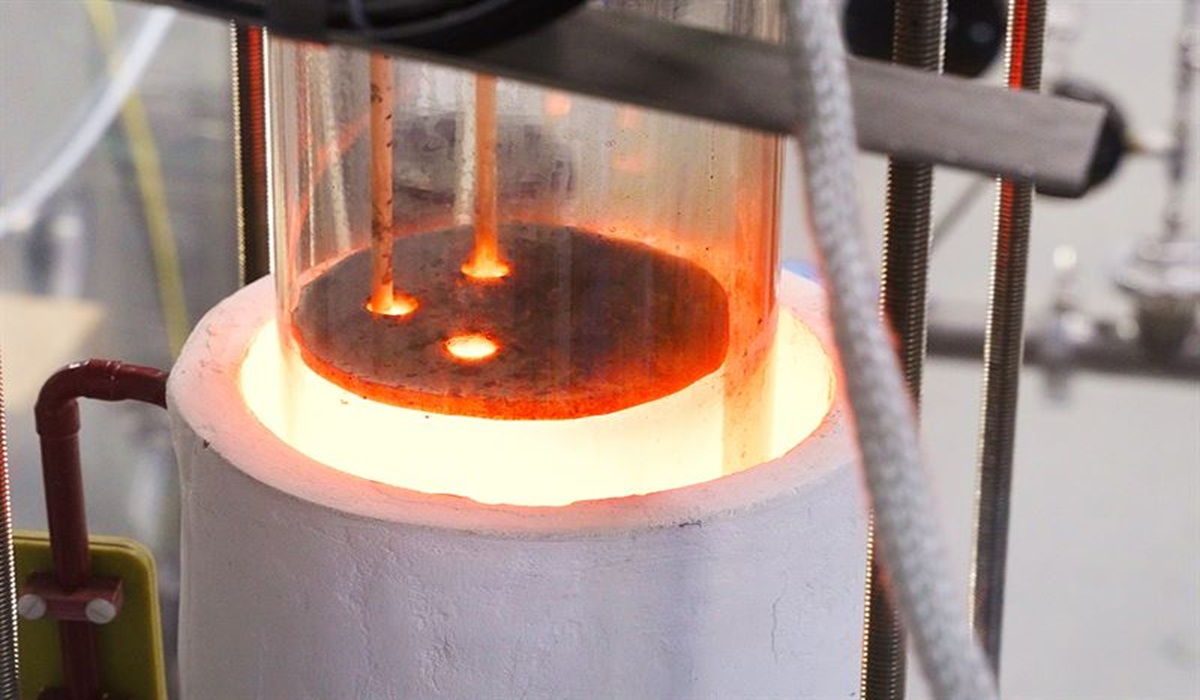
Finland’s Outokumpu has called its “low CO2 metals” technology EvoMaterials.
“EvoMaterials is more than a step forward in reducing carbon emissions,” the company’s chief technology officer and head of EvoMaterials, Stefan Erdmann, said.
“It can fundamentally change how we think about extracting and producing metals.
‘We can recover critical materials from resources that were previously considered waste and produce the quality the application demands. That would open entirely new possibilities for securing the materials we need for the future.”
Development of a sulphidation-based process technology started at the Massachusetts Institute of Technology (MIT) in 2021. Outokumpu said the technology increased the chromium content and chromium-to-iron ratio of ferrochrome and could be extended to other strategic materials, including nickel and molybdenum. It could also extract metals from side streams, broadening its commercial potential.
The Finnish company had scaled and advanced the technology towards commercialisation, “supported in part by a non-exclusive patent licence agreement from MIT”.
The only chrome mine in the EU, Outokumpu’s Kemi mine in Finland, provided “a unique strategic asset, enabling EvoMaterials to start with enriched ferrochrome and chromium metal”.
“These materials are essential for meeting the future demand of several critical sectors, including space, aviation and defence,” Outokumpu said.
“Over the longer term the technology could help establish a fully Western supply chain for critical chromium materials. In addition to reducing emissions and improving resource efficiency, our modelling indicates that the technology can be economically competitive compared to conventional production routes.”
The company said testing and modelling of new processes was underway at its laboratory in Haverhill, Massachusetts.
“Next, we will scale up the technology at our pilot plant in Londonderry, New Hampshire, US, from 1kg to 1 tonne, demonstrating the technology’s scalability and industrial feasibility. This pilot plant project is progressing according to plan, and the plant will be operational during the first half of 2027.
“The next step will be to build an industrial-scale plant, to be operational in 2030. Outokumpu is currently evaluating potential locations in the US and Europe.
“From 2030 onward, to reach the full potential of the technology, the ambition is to expand into other materials, such as specialty alloys, nickel and molybdenum as well as entirely new material streams, further entrenching Outokumpu’s leading position in low-CO2 metal solutions.”