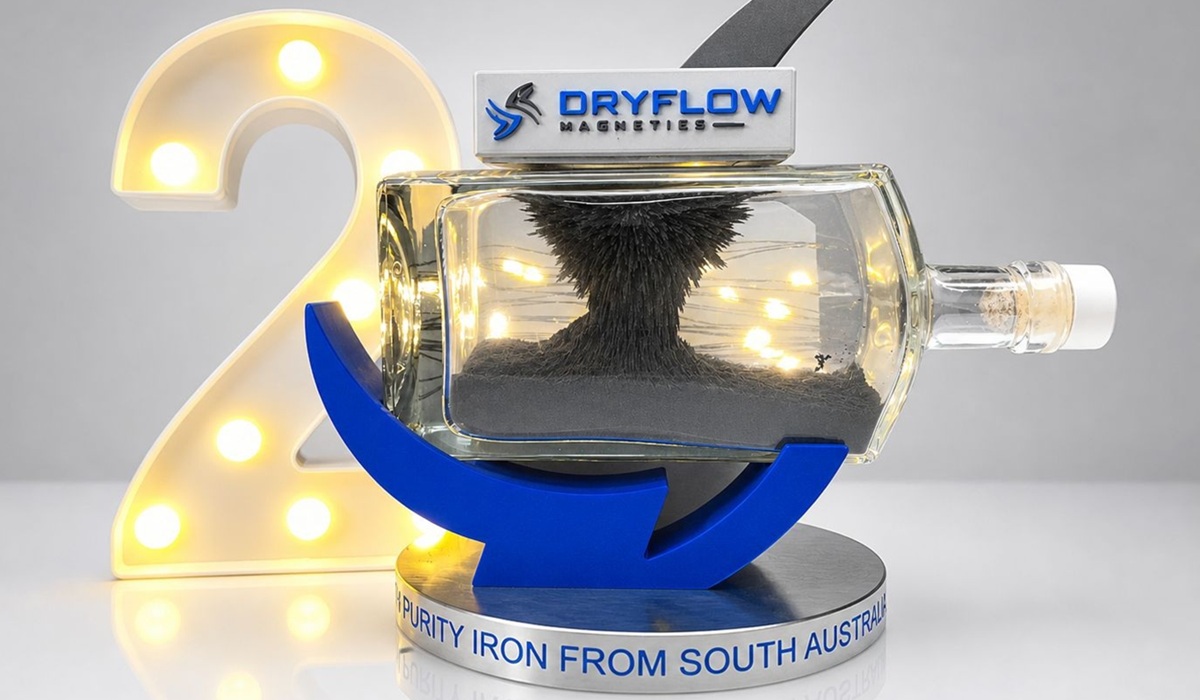
Australian mineral processing technology start-up DryFlow Magnetics says an initial small-scale commercial version of its proprietary magnetic iron separation plant bound for California in the US will hopefully be a preview of a much larger facility in South Australia.
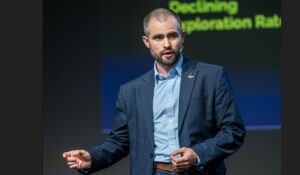
DryFlow CEO and co-founder Brett Boynton said in Adelaide, SA, this week a modular, 20 tonnes-per-hour unit acquired by US Iron was originally designed to guide its engineering of a 200tph plant for a local operator. “We didn’t expect the interest from offshore,” he said at an event to mark shipment of the first unit.
DryFlow finalised a A$12.5 million seed capital raise in June this year backed by Orion Resource Partners, Virescent Ventures, Taronga Group and Significant Ventures. It said the funding would support its US expansion, “including deployment of a laboratory unit to support a collaborative critical minerals research partnership with a US Federal Government funded group and commercial validation in an operating mine site in California”, as well as its work in Australia.
The company says its patented stacked magnetics technology facilitates waterless mineral processing by effectively separating valuable minerals from gangue early in a process flowsheet, eliminating the need for process water. The approach produces “high purity iron feedstock before materials enter complex, high-cost, low-waste tolerance downstream metals processing”: at 67% or more purity, potentially ideal feedstock for green steel production.
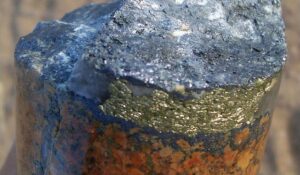
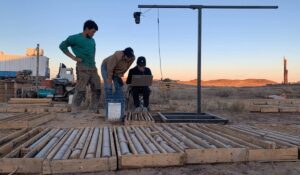
Boynton said DryFlow had completed engineering work for privately-owned Peak Iron Mines, which says it has outlined a resource of 2.9 billion tonnes of “soft, coarse-grain magnetite capable of upgrading to plus-66% Fe concentrate” at its Hawks Nest property between Tarcoola and Coober Pedy. Peak Iron says Hawks Nest is “ideally positioned to support the decarbonisation of the steel industry with direct magnetite feed to underpin the development of green iron and steel in South Australia”.
Sydney-based think tank Climate Energy Finance (CEF) said last month in a report calling for a national iron and steel decarbonisation strategy that Australia’s major iron ore export sector was at risk as China and other ore buyers decarbonised their steel industries.
The Australian Department of Industry, Science and Resources said in June the country’s A$117 billion of 2025-26 iron ore exports could dip to $108 billion in 2026–27 and $77 billion by 2030–31.
“As major North Asian partners including China decarbonise their steel industries, Australia’s higher-impurity, lower-grade Pilbara ore – which is less readily suited to steel decarbonisation – is increasingly exposed,” CEF said.
Australia’s $1 billion public Green Iron Investment Fund, launched in 2025, has earmarked $500 million in grants for domestic green iron and steel projects and up to $500 million to preserve SA’s Whyalla Steelworks. A 2023 Accenture report said a “green iron and steel industry” could generate up to $96 billion a year of export revenue by 2040.
Boynton said DryFlow aimed to be an integral part of Australia’s first commercial-scale green iron operation.