US-based Orion Industrial Ventures says it is keeping an eye on the mineral in-situ recovery space, saying massive future demand forecasts will necessitate lower impact extraction methods.
The deep-tech venture investment arm of New York fund manager Orion Resource Partners says capital intensity and streamlined permitting “potential” are among the drivers it sees of rising interest in ISR, which is also seeing lixiviant advances and will benefit from high-tech sub-surface surveying technologies.
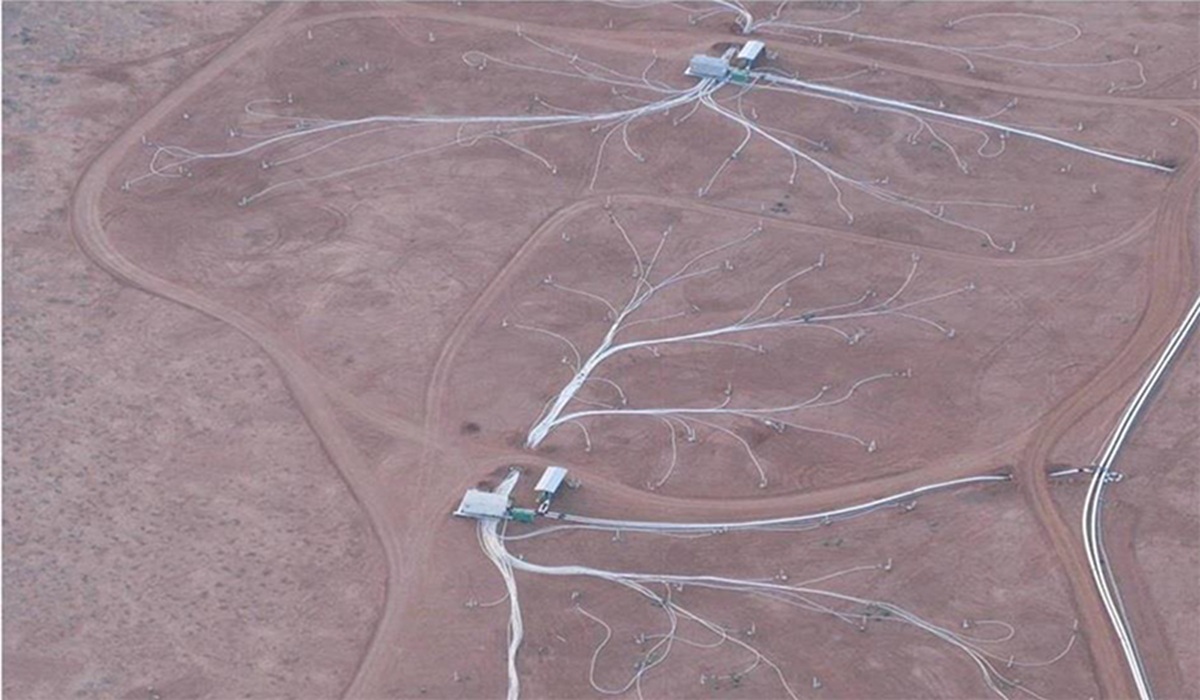
Used successfully in sedimentary uranium recovery, ISR could be applied more widely to access lower‑grade or otherwise marginal mineral deposits at competitive costs, expanding the economically recoverable resource base for energy-transition metals without new, increasingly capital-intensive large-scale pits or underground workings.
“This is particularly important in copper where the combination of substantially declining ore grades and massive demand forecasts in the coming decades will necessitate lower impact methods,” Orion says.
“Our focus at OIV is widening the design space for ISR, enabling more deposits to be amenable to ISR while doing so in an environmentally responsible manner.
“We are excited – albeit cautious – about the potential for ISR to work for many deposit types and settings.
“Its cost structure is genuinely compelling, with the elimination of drilling and blasting, hauling, comminution and tailings handling.
“ISR can access sub-economic or currently stranded ores, including deposits that may lie under infrastructure or sensitive lands where openpit mining is a non-starter.
“Its modularity is also a genuine strength – a core tenet of the kinds of heavy industry companies we look to back – allowing scaling up and down with market conditions, allowing for flexible, lower-risk capacity addition.
“Lastly, this method has the potential to leverage a suite of technology advancements from other disciplines in drilling, downhole sensing, lixiviant development and closed-loop process control.
“In summary, ISR is a structurally lower-impact, lower-capex mining method to unlock critical minerals in jurisdictions where conventional mining may be facing permitting and social constraints.”
The negatives currently include the narrow hydrogeological and geochemical setting range for economic application, with natural or induced permeability vital to allowing fluids to move through an ore zone.
“The minerals must be readily mobilised into solution by acidic or basic lixiviant with reasonable consumption of reagents,” Orion says.
“There must also be hydrogeologic containment of the lixiviant within the ore zone to avoid migration, a potential impediment to regulatory adoption. It must also produce solutions enabling practical recovery at the surfaced using established methods like solvent exchange and electrowinning.”
Orion Resource Partners closed its US$2.2 billion Mine Finance Fund IV earlier this year, taking its total assets under management beyond $9 billion.