A 15-year, US$5.1 billion game of mining software musical chairs has left Australia’s Maptek, celebrating its 45th birthday this year, as the last independent mining software major standing. Executive chair and son of founder Bob Johnson, Peter Johnson, sees the company as the winner.
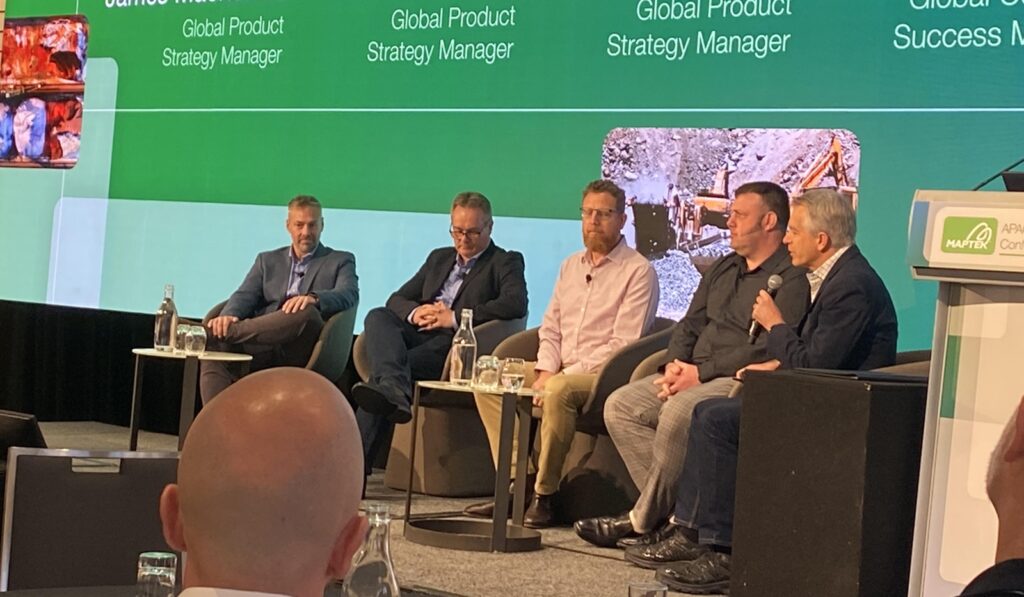
“The market is shifting now,” he told InvestMETS.com after the company recently hosted more than 200 customers, partners and employees at an Asia Pacific Users forum in Perth, Western Australia.
“We are winning new business in all the regions we operate.
“Mining companies everywhere are more cognisant of the need to enable software and technical systems that are tightly aligned with their operational and business models and are looking for solutions that allow both the flexibility and advanced functionality to deliver that, together with a user experience that is efficient, automated and reliable.
“Maptek has a proud history of supporting our users better than anyone in this space and that experience, built over 45 years of success, has guided us in developing the range of solutions we offer now.
“That is a key differentiator that should not be ignored.
“All of our competitors have sold out.
“While that has been happening Maptek has been building the next generation of mining software technology.”
Perth APAC Users forum attendees, including representatives of BHP, Amazon Web Services and Covalent Lithium, heard about new software, scanning technology, AI and the latest on Maptek’s Vestrex cloud platform. The company is said to have more than 36,000 regular users of its products at over 3300 active sites in at least 110 countries. About 450 sites have been added in the past five years.
A key reflection in Perth was shifting perceptions of how and where value is generated and added by technology in mining.
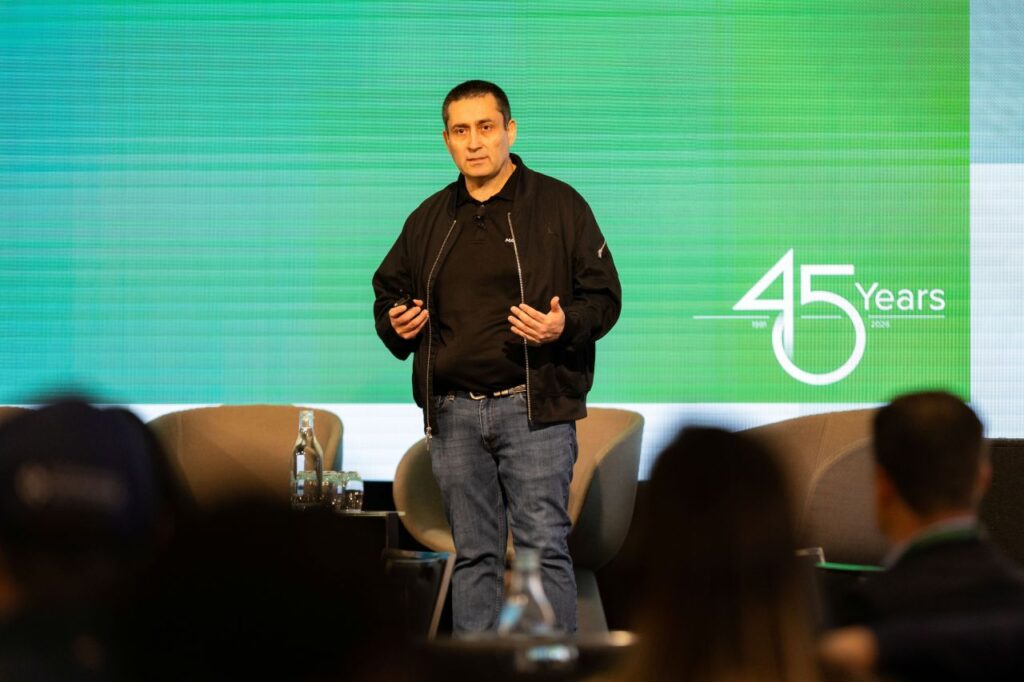
“We started in 1981 with manual work. Then we moved to digital geology, digital mine design, digital capture of reality, connecting operations, optimisation and automatic workflow,” Maptek CEO Eduardo Coloma told the gathering.
“Every decade the technology changed but look more closely because something that is happening every time we removed a bottleneck is that mining professionals could focus on higher value problems.
“The next chapter is turning all that knowledge – all those possibilities – into a framework that allows miners to make better decisions.”
AI makes the chapter a potential blockbuster in its own right but “AI is not valuable just for the sake of AI”.
“The scale is different and the possibilities are different but the idea is the same,” Coloma said.
“Less time doing repetitive work, more time understanding, more time exploring and more time deciding.”
New chapter, different competitive view
In an era of profound technological change and now the consolidation of most historically significant mining software brands under the standards of groups such as Caterpillar, Epiroc, Sandvik, Hexagon, Constellation Software, Bentley Systems and Weir, the key question is, can Maptek continue competing effectively in this new mining tech landscape?
“The key consideration, I believe, is to what end that [consolidation and integration] force is applied, and what is the motivation of these big entities behind their getting involved in the software space,” Peter Johnson says.
“OEMs view this space as an add-on to their existing rubber and steel businesses – a possible differentiator to try to diversify and differentiate the offering from just trucks and drills and shovels.”
These were also businesses being disrupted in one way or another now.
“The software offerings will always be tilted towards deriving a benefit in those segments where they have big investment, much larger revenue and profit potential and real strategic interest and much more to lose.
“Unfortunately, it does not add much real value for the end users of the software.
“And these [acquired] software companies were all doing fine before they were bought out.
“Having their raison d’etre redirected to better serve the performance of the OEM business is not aligned with delivering better outcomes for the companies and users requiring a better way of analysing, designing and managing mines.
“Successful software businesses are those that invest in the development of solutions and technology with a combination of close customer relationships with the end users and a deep understanding of the problem space they are working in – a space which is increasingly complex.
“The distribution networks and cross selling channels of an OEM business, however large, are not sufficient in either of those areas to effect any real benefit because it is a completely different part of the industry.
“The decisions being made by users in this space are more complex and more critically important than any that can be made than simply lining up the branding with the company that also sells the equipment to a mine and the gap between the functionality of an OEM-sponsored solution offered and that required to really meet the business objectives of a mine will only widen as there will always be that background tendency for the solution to be developed in the context of supporting the performance of the core OEM business as a priority, even if that’s not stated.”
Investing to stay ahead
Maptek itself has made acquisitions, such as PETRA Data Science and part of Orelogy, and invested heavily in products such as Vestrex to regenerate its offering.
“It is fair to say that we have fundamentally changed what Maptek offers the industry with Vestrex,” Johnson says.
“While we continue to invest in delivering and supporting the best offerings across geological modelling, mine planning and operations, scheduling and optimisation, we now look at this not only as a set of functional solutions across a value chain but as one challenge.
“That challenge is helping miners make better decisions.
“To achieve that we have invested further in PETRA Data Science, whose Maxta solutions span the value chain to help drive performance across the value chain.
“Vestrex will become the operating system for technical processes at mines”
“The decisions made at the planning and execution stages do affect performance downstream and the Maxta products can help with maximising that value chain performance. We are connecting that to the data and planning decisions already in place to help make that a part of the day-to-day workflows.
“Vestrex will become the operating system for technical processes at mines.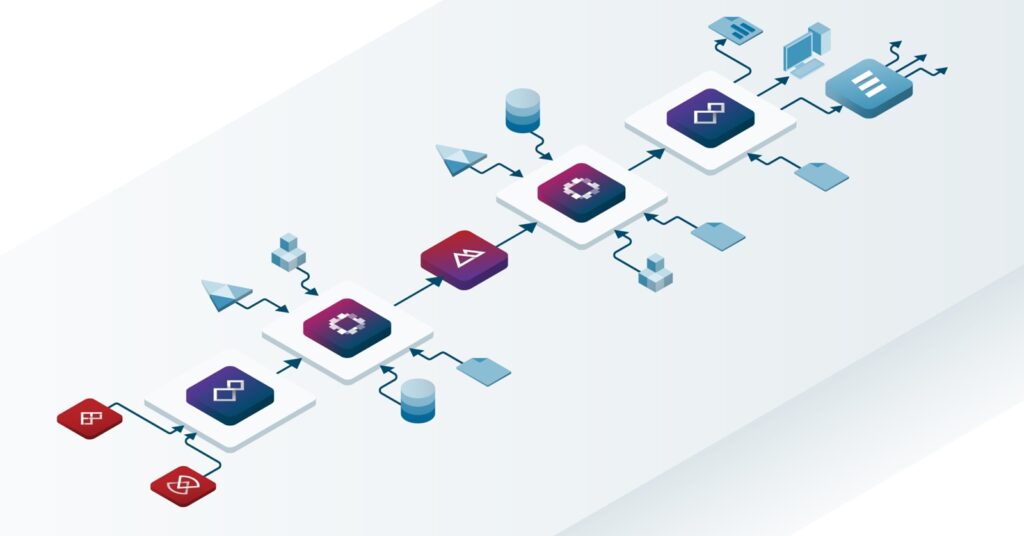
“Miners will be able to define and implement workflows and processes across data types, applications – from any vendor, or bespoke in-house applications – and across functional areas and disciplines in mines. We are already ingesting data from fleet management systems and plant control systems to help understand and improve those processes and the upstream decisions that affect them. This is all possible to automate to varying extents and can all be guided and interacted with hand in hand with AI agents to help guide and understand the decision process within the complexity and scale of a typical mining operation data and process landscape.
“Maptek is the only company really able to achieve this.
“I truly believe that.
“We are the only company with the depth and scale of technology, the industry knowledge and experience and the dedicated expertise of our people focussed on solving this problem and supporting our customers through the journey to achieve this.
“Add to this the fact that we are the only mining software company of any significant size that is able to make decisions independently and the momentum we now have in this space and I am very confident about the future here.”
Mining a growth market?
Mining has been a software market that in 50 years has produced a handful of $100 million-a-year-plus enterprises and Maptek is among them. The company’s head of experimentation and technology, Simon Ratcliffe, said during the Perth conference mining was an industry that was “uniquely resistant to digitalisation”.
Johnson says that is another way of saying mining is uniquely resistant to risk and he points to the industry’s exploration and development time horizons and related commodity-price, financing and myriad other risks.
“Digitalisation can be seen as a risk and that needs confidence, understanding and more to help accept,” he says.
“The seemingly continual proliferation of new vendors is not, in my opinion, so much about a pie that is not growing but more about an increasing number of vendors still trying to eat just one slice of the pie and thinking that slice tastes like success.
“Maybe it’s the functional desktop application slice. Maybe it’s the data storage and data management slice. Maybe it’s the integration services and application support slice. Suffice it to say, these are the same slices of the pie that many companies, including Maptek, have been chewing on for decades.
“Doing that makes a decent business and that attracts more people to start up a company and take a bite out the slice of pie but there is a large proportion of the pie that remains untouched and has not yet been addressed until now.
“These pieces connect the data analysis and functional decision spaces and discipline specific operational work to the business performance and understanding of the real underlying performance of the mine.
“So much has been written about the siloed nature of operations and the fact that the technical systems applied to mining generally tend to all into that siloed model that I can’t bear to keep talking about it now. But when we look outside of mining at oil and gas or fintech or manufacturing we see technology providers that are more able to chew the whole pie. In doing so they deliver vastly greater value to the industry they serve and provide a better solution to managing the risks discussed earlier, because the visibility and understanding about how those businesses are affected by technical decisions throughout their value chains is better connected.
“People working in those industries can make better decisions.
“I believe there is a great appetite within mining for the rest of the pie to be addressed and it is a great opportunity.
“That is one reason we are doing it.”