Toronto and New York-listed IsoEnergy will own 33% of a new “technology-enabled US uranium company” under a circa-US$500 million deal with Wyoming-based DISA Technologies aimed at tapping into an expanding US domestic nuclear fuel supply base.
IsoEnergy is vending its Utah brownfield uranium assets, including the former Tony M mine near tiny Ticaboo in the state’s south-east, into a new vehicle called DISA Uranium Corporation, controlled by DISA Technologies’ founders and backers. They started DISA Technologies in 2018 and have privately raised more than $80 million to advance development and commercialisation of High-Pressure Slurry Ablation (HPSA) processing technology so far used to recover nickel, copper, precious metals, rare earths and other minerals in a series of commercial and pilot deployments.
Earlier DISA Technologies investors such as Galvanize, Valor Equity Partners, Evok Innovations, Halliburton Labs and Veriten are joining Tembo Capital Management and BHP Ventures in a new $105 million DISA Uranium private placement. IsoEnergy is also tipping in $33 million.
DISA last year secured what it described as the only licence handed out by the US Nuclear Regulatory Commission (NRC) to recover uranium from abandoned domestic sites, of which there might be more than 15,000 including 4200 defence-related uranium mine (DRUM) sites that supplied uranium ore to the US Atomic Energy Commission between 1947 and 1970. Most of the abandoned sites are in Colorado, Utah, New Mexico, Arizona and Wyoming.
It will take its uranium focus into DISA Uranium while DISA Technologies will continue marketing and supporting HPSA independently in other mineral market segments.
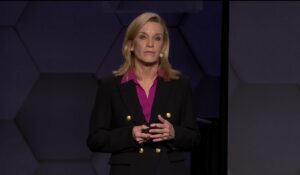
DISA Technologies CEO and co-founder Greyson Buckingham is heading up the new entity on a board likely to feature IsoEnergy CEO Phillip Williams and chair Richard Patricio, Tembo Capital’s George Pyper, other DISA directors Scott Saxberg and Marty Reed, and former US NRC commissioner Jeffrey Merrifield.
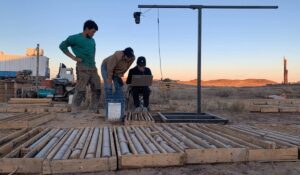
IsoEnergy, which will retain its flagship Canadian uranium project in Saskatchewan as well as Australian assets picked up in its recent $49 million acquisition of Toro Energy, is also transitioning its Utah operations team into DISA Uranium. IsoEnergy has been progressing a preliminary economic assessment on Tony M toward planned completion by the end of this year and will now “incorporate HPSA efficiencies” into the plan.
“By contributing our permitted, past-producing Utah asset base and pairing it with DISA’s proprietary HPSA technology, we believe we can enhance project economics, expand the universe of viable conventional uranium resources and ultimately support domestic processing infrastructure,” IsoEnergy’s Williams said.
“At a time when the United States is placing renewed emphasis on nuclear energy, energy security and the reshoring of its nuclear fuel supply chain we believe this partnership is both timely and highly differentiated.”
Williams said Tony M had state and federal operating permits, established underground workings, and a toll milling agreement with Energy Fuels’ White Mesa Mill in neighbouring San Juan County.
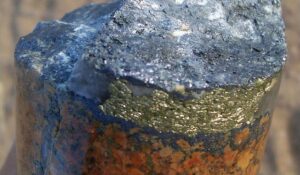
Buckingham said DISA’s modular mineral liberation technology used high-velocity slurry streams to generate particle-on-particle collisions, causing material to fracture along natural mineral grain boundaries. Unlike conventional mineral processing methods that relied on grinding media and chemical reagents, HPSA mechanically separated target minerals from host material, upgrading feed by concentrating valuable minerals into a smaller volume for downstream transportation and processing.
Testwork on mineralised material from Tony M had demonstrated potential for a circa-four-times grade uplift, 78% reduction in material volumes requiring transportation and c88% uranium recovery.
“DISA Uranium was built on a straightforward idea: much of the uranium this country needs is already out of the ground, sitting in waste piles across the West,” Buckingham said.
“Remediating those abandoned mine sites and recovering the uranium and vanadium they hold is the core of our business and the reason we hold the only NRC licence of its kind.
“IsoEnergy’s Utah Portfolio extends that platform. HPSA is designed to make those conventional assets meaningfully more economic by upgrading feedstock at the mine site and reducing what has to be transported and processed.
“Together, recovered legacy material and a scaled conventional resource base give us the feedstock to bring to life a new domestic uranium recycling and processing facility – the missing link in rebuilding an independent American nuclear fuel supply.
“With the support of this investor group DISA Uranium is positioned to move quickly.”
DISA has Stifel as financial adviser and Wilson Sonsini Goodrich & Rosati as legal counsel on the deal, which is expected to close this month.
TD Securities is IsoEnergy’s financial adviser and Cassels Brock & Blackwell and Parr Brown Gee & Loveless its legal advisers.