Australian and American metal recycling technology companies say their new licensing and development agreement could lead to a “Western-centric production pathway” for magnet rare earth oxides to meet surging global demand.
Australian Securities Exchange-listed Ionic Rare Earths will work with Nth Cycle to insert the latter’s electro-extraction precipitation step into the refining flowsheet it is demonstrating at pilot scale in Belfast, Northern Ireland.
The companies believe Nth Cycle’s electro-extraction closed-loop process can complement long-loop material separation and recycling technology developed at Queen’s University in Belfast and patented by Ionic RE subsidiary, Ionic Technologies. Nth Cycle’s process uses electricity rather than oxalic acid to convert recycled feedstocks into high-purity oxides while regenerating hydrochloric acid for “continuous reuse”.
Massachusetts-based Nth Cycle announced an offtake deal in March this year with Trafigura under which it could supply the international commodities trader with up to US$1.1 billion of metals recycled from black mass. It previously secured circa-$65 million of equity funding from the likes of Colorado-based environment-focused venture capital firm VoLo Earth Ventures, MassMutual, Caterpillar Venture Capital and Equinor Ventures, the VC arm of energy group Equinor.
Ionic RE, which has a current market value of about $50 million, is seeking more than $100 million to fund expansion of its 10 tonnes per annum Belfast plant to 400tpa. It says it has an offer of £12 million of grant funding from the UK government. The company says its demonstration facility, operational since early 2024, is efficiently separating and refining neodymium, praseodymium, dysprosium and terbium from spent magnets and waste using its hydrometallurgical process.
Nth Cycle started what it called a commercial-scale module of its Oyster system in Ohio, USA, later in 2024, producing the country’s first premium-grade nickel-cobalt mixed hydroxide precipitate. It wants to add operations in South Carolina, USA, and the Netherlands by 2028.
Nth Cycle said its Oyster cells could average 3100 tonnes per annum of metal output, depending on the metal content of feedstocks. “Our patented electro-extraction … produces the same chemicals metal refining uses today, but with electricity instead of fossil fuels,” the company says. “Traditional metal refineries assume the risk of large, fixed volumes, lengthy permitting timelines and require billions in upfront investment and full capacity utilisation to operate profitably. In comparison, the Oyster’s modular, compact design deploys virtually anywhere, reduces build time from five or more years to under two, capital intensity by up to 70%, and produces competitive margins at five-to-10-times smaller scale.”
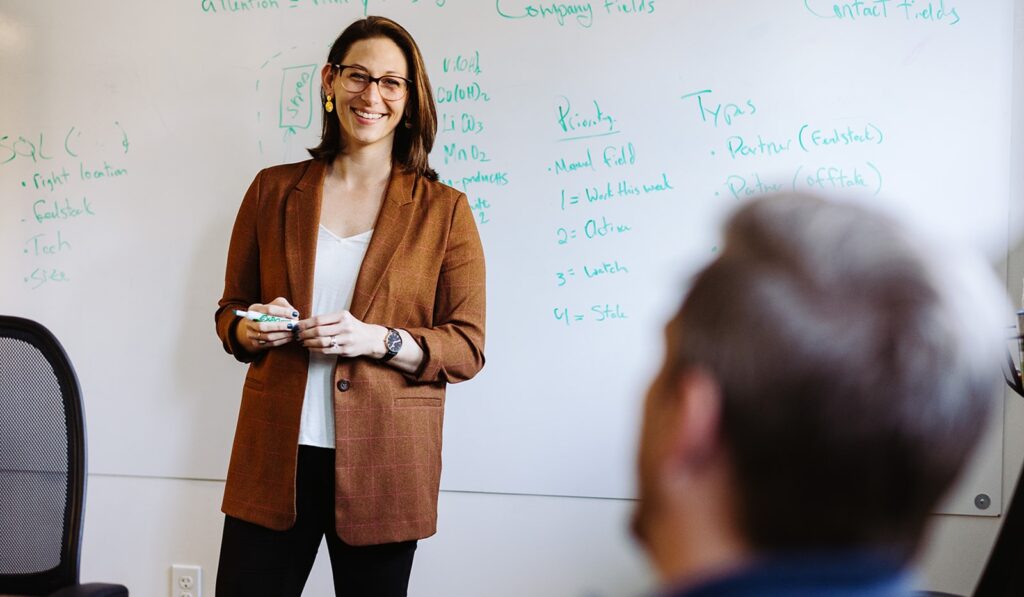
CEO and co-founder Megan O’Connor said building ex-China rare earth and other resilient supply chains meant “solving every point of dependence, not just the most visible ones”.
“Nth Cycle’s technology closes one of the largest remaining links to Chinese chemical supply chains in the rare earth refining process,” she said.
“And because our electroextraction platform works across rare earths, nickel, cobalt, copper and beyond, every application of our system accelerates the critical mineral supply chains our economy and national security depend on.”
Ionic RE puts an $11.3 billion target on forecast global magnet rare earth oxide demand in 2030.
It says China currently refines 90% of the world’s rare earth elements found in ore and end-of-life materials, with recovery occurring during oxalic-acid-reliant precipitation. This creates a “hidden dependency facing all Western refiners building operations onshore, which this partnership between Ionic RE and Nth Cycle aims to address”.
“Oxalic acid represents approximately 50% of Ionic RE’s benchmark carbon footprint, which has been demonstrated to be 60% lower than primary [mined] supply of rare earth oxides,” Ionic RE CEO Tim Harrison said.
“This ongoing innovation will ensure we continue to stay a step ahead on providing not only the highest purity rare earth oxides in the market, but validated materials for Western end users.”
Melbourne-based Ionic RE also has a 60% stake in a Uganda RE prospect. Two years ago it entered into a 50:50 joint venture with another Australian firm, Viridis Mining and Metals, to explore the potential for building a rare earth refinery and magnet recycling facility in Brazil. The JV would combine Ionic RE’s separation technology and feedstock from Viridis’ Colossus RE project in Brazil.’
Ionic RE’s share price is down about 28% in 2026, capitalising the company at A$71 million.