McKinsey & Co Global Materials Perspective 2026 authors were this week highlighting a potential US$450-to-750 billion-a-year value uplift for mining and metals companies from productivity gains. They also suggested productivity wasn’t the only thing that had stalled in the Western mining hemisphere.
Gustav Hedengren, a consultant in McKinsey’s Stockholm office, said AI and automation were pivotal devices in “the biggest toolbox” the industry had ever had in front of it to achieve better operational and project delivery outcomes.
He said automation and robotics, often combined with AI, and the use of AI and advanced analytics to improve processes were opening up new opportunities to raise productivity across the value chain. “Of course you need to take a value chain perspective when implementing these steps. There will be different value pools in different steps for different companies – some easily addressable and some much harder to address.
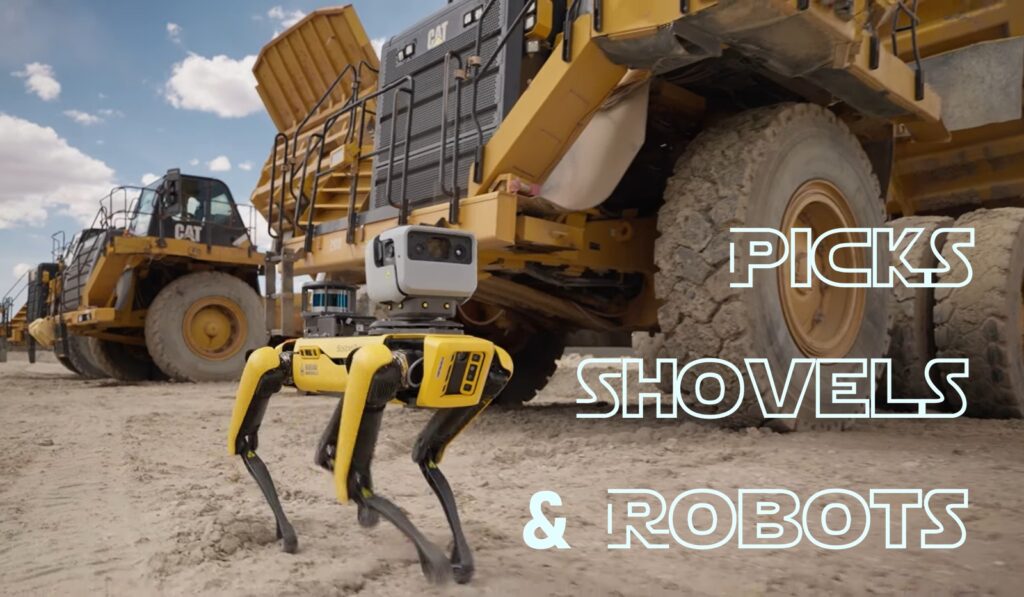
“Hauling, with the rise of autonomous haulage systems, is up to 42-to-58% of that value chain step’s total cost that could be saved.
“The autonomous haulage fleet nearly tripled from 2024 to 2026 alone. We’ve gone from around 2100 units to above 5500 and this trend is actually increasing from what we see in 2026.”
Hedengren said what was notable about the automation numbers was the “large discrepancy between which regions adopt this technology fast”.
On total autonomous vehicles deployed, “China now doubles Australia and then again triples the third and the fourth largest regions, Canada and Chile”.
“This trend is mimicked in the metals space … where in general in manufacturing China has grown by 18% CAGR and is now the largest industrial robot deployment density region and holds 40-50% of all the global robotics patents.”
Cleantech Group says sovereign tech race is on
It’s goodbye green premium, hello sovereignty premium, according to Cleantech Group research manager Anthony DeOrsey, one of 30 technology investors and market doyens who judged this year’s 2026 Cleantech 50 to Watch list. “The sovereignty premium plays consistently in this year’s list, with a high presence of companies that promise more energy supply and security, an invigorated critical minerals ecosystem and increasing anxiety over water supply,” DeOrsey says in US-based Cleantech’s 50-to-watch-list report.
The watchlist is a Cleantech companion piece to its annual Global Cleantech 100. DeOrsey says it is meant to indicate the direction of travel in the next waves of innovation.
“With certainty, we’ve exited the days of the green premium – this much has been evident for the past 18 months or so – but now we are firmly entering the age of the sovereignty premium that is likely to define the late 2020s,” he says.
“It is safe to say that the race to build out AI infrastructure and the race to establish sovereign supply chains are no longer running in parallel. All major economies now view a thriving, globally competitive home AI ecosystem as integral to national self-determination.”
DeOrsey says a vital race within a race is the sprint for mineral and material independence.
“The International Energy Agency recently warned that despite the many efforts to stand up critical minerals extraction and refining outside of China the growth in demand has only led to more concentration of refining in China.
“This is not to say that mineral refining outside of China is an unworthy or impractical pursuit but rather that most of the markets attempting to do so – [led by] US, Europe – are at the bottom of an ever-steepening mountain.
“At Cleantech Group we’ve spent much of the past two years analysing mineral shortages and the required innovation for lithium, copper, rare earths and, more recently, gallium. There will need to be multiple approaches to resolving mineral and material sources across the spectrum of demand owners’ pain points, and there is a high degree of variance in the maturity of solutions.”
DeOrsey said at least eight companies “attacking the critical minerals and refining challenge” in the latest Cleantech 50 to Watch list underlined the variety of minerals being addressed and the approaches being leveraged. The companies were US-based Thunderstone, ChemFinity Technologies, REEgen, Supra Elemental Recovery, Cetos Water, and DexMat, Canadian firm Green Graphite Technologies and France’s Recupere Metals.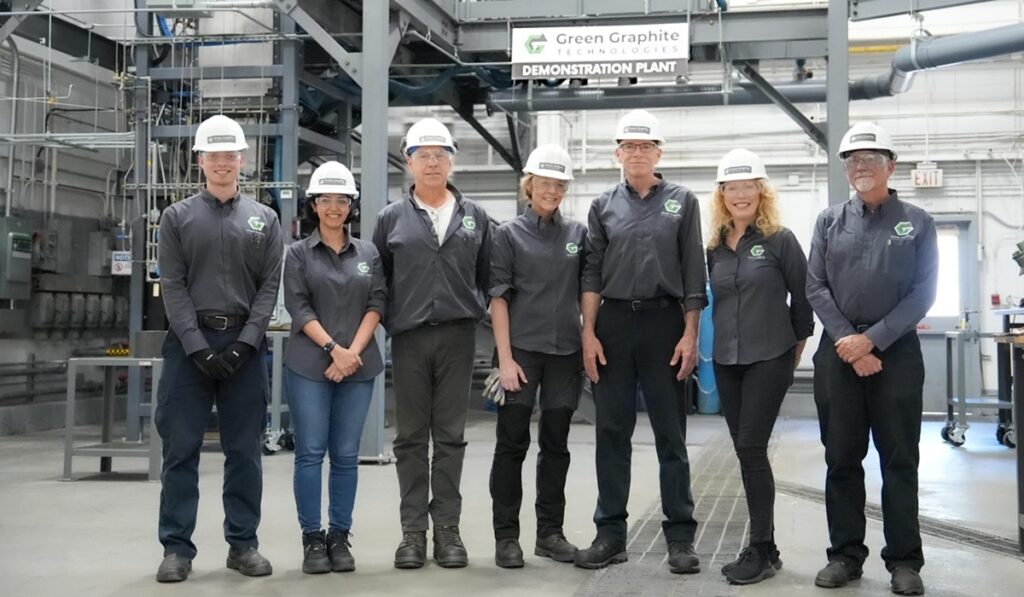
Thunderstone was using high-voltage electrical pulses to penetrate rocks. ChemFinity used molecular recognition membranes to selectively isolate metals in water. REEgen similarly drew rare earth elements out of waste streams with engineered microbes. Supra had 3D printed absorption cartridges to pull scandium and gallium out of waste while Cetos had a membrane-less approach to water treatment.
Green Graphite claims to be able to purify mined and recycled graphite to battery grade.
Recupere doesn’t need a smelter to turn recycled inputs into electrical-grade copper.
DexMat is aiming to replace copper with Galvorn, “a carbon nanotube that can conduct electricity similar to copper and is lighter and stronger”.
Cleantech’s top-50 also features Germany geothermal electric-impulse drilling technology company, Telura, and Canadian heat transfer flow control tech firm, TerraFerno Geothermal Solutions, two companies that almost certainly have an eye on mining and metals opportunities.
Volvo goes all-in on mining
Sweden’s Volvo Group has established a dedicated mining group and appointed Per-Erik Lindstrom to lead it from the start of 2027.
Lindstrom, senior vice president of Volvo Trucks International, says the mining industry is evolving and looking for partners that can improve productivity, safety and sustainability. “Our goal is to be a long-term partner in that transformation, helping customers create greater value through the combined strengths of Volvo Group,” he says.
While Volvo Construction Equipment currently sells and supports mining machines around the world, Volvo Mining will focus initially on miners and contractors in Sweden, Norway and Finland, “with the ambition for phased expansion into additional markets”. Volvo Mining will be part of Volvo CE.
“Mining has been an important part of the Volvo Group for decades but the industry’s growing significance calls for an even greater level of focus,” Volvo CE president Melker Jernberg said.
“With Volvo Mining as our centre of expertise we are combining capabilities from across the group to further enhance customer value in collaboration with our retail partners. This will create new opportunities to strengthen our position in a strategically important and growing segment.”
Autonomy will be a central part of the Volvo Mining offering.
About Picks, Shovels & Robots: “When everybody is digging for gold it’s good to be in the pick and shovel business”. In the 1800s thousands rushed to California – and other parts of the world – to find gold. Most miners went broke or didn’t survive. Merchants who sold shovels, pans, denim pants and staples made a fortune. Some of the technology has changed but suppliers of essential prospecting and mining tools and services have never been more in vogue.