CSIRO missed out on the Copper to the World 2026 Innovation Hour gong but looks to be on yet another winner with its Mineralogical and Elemental Analyser (MEA).
One of the world’s best technology incubators, Australia’s national science agency has about 300 of its 5200 staff working in its mineral resources research unit and nearly one-third of those focused on advanced mining technologies. CSIRO Advanced Mining Technologies senior technical and commercialisation adviser Dr David Miljak said at Copper to the World in Adelaide, South Australia, specialisation tracks of the division were sensing and autonomous control, and waste recovery and reduction. “We’re trying to build technologies that strive for zero harm or zero entry. Productivity is a big theme … so, when we’re confronted with declining ore grades and more complex deposits, what technologies can we bring to lift productivity?”
Miljak was being a little coy when told the CTW audience CSIRO’s minerals R&D had produced a “few failures and a few successes” over the years. “But that’s the nature of commercialisation,” he said.
From SiroSmelt (later Ausmelt) in the 1970s and Mine Site Technologies in the 1980s to more recent successful collaborations with the likes of Codan, Chrysos Corporation, Emesent, NextOre and Gekko Systems, CSIRO has been an unqualified success as a mining tech developer and probably would be even more celebrated if current capital flows into the nascent space existed in the past.
“One technology we’ve been looking at in the last few years is the Mineralogical and Elemental Analyser – it’s an imaginative name – which measures minerals and elements,” Miljak said. “What we’re doing here is we’re fusing two styles of measurement. One’s XRF – X-ray fluorescence – and that gives you a fingerprint of the elements in a sample. That’s been around for a long time in mineral plants. But the other thing we’re trying to bring now is a robust measurement of mineralogy in the plant. So we’re using XRD [X-ray diffraction], which is a gold standard for mineralogy, but we’re … merging those two methodologies in this instrument called MEA.”
Pitching MEA to the CTW Innovation Hour judges, CSIRO project scientist Khushi Daga (pictured below) said 65 industry interviews, six completed feasibility studies (with two more underway) and two successful field deployments (again, with two more upcoming) made one message clear: “The lag between sampling and action is a growing constraint,” she said.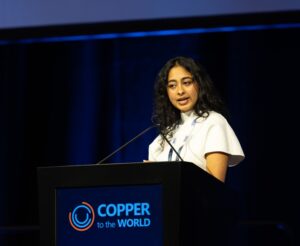
“Industry wants reliable, real-time data that integrates into existing workflows and informs better decisions and performance. Process optimisation is only as good as the data behind it.
“As AI adoption grows and ore grades decline, accurate data is imperative now more than ever. As a missing link in existing sensing technologies, MEA gives plants real-time control and visibility over mineral compounds that hold the key to liberating the commodity and increasing revenue. MEA delivers actionable insight to optimise grinding, flotation, stockpile blending, concentrate and tailings management while the process is still running.
“By shifting from delayed lab data to continuous online insight you gain early visibility of changing ore characteristics, catching catastrophic spikes in deleterious ore before it impacts your process.”
A second clear message was that MEA was commercially ready.
“If you’re looking to improve process performance, reduce variability or explore next-generation sensing and sorting we’d like to work with you,” Daga said.
Sandvik, Byrnecut and the future of mining
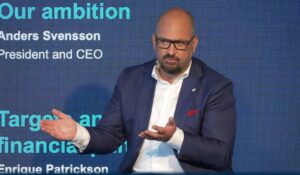
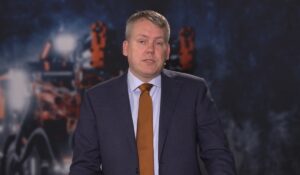
Sandvik’s global business development manager Will Howard and the managing director of Byrnecut Australia, Pat Boniwell, were in Adelaide rather than with their colleagues in Tampere this week to talk about the future of mining. Their message: miners don’t need to wait for tomorrow’s technology to deliver the very significant productivity gains they are chasing today.
Sandvik, one of the world’s biggest mining equipment manufacturers, had a bunch of its customers in Finland this week to swap notes on the future of mining. Byrnecut, among Sandvik’s largest customers and these days a business of more than 8000 people, was well represented in Tampere.
Howard said most of the world’s major copper mines had transitioned from surface to underground mining – “not because they want to but because they have to” – and were getting deeper.
“All the major copper resources at good grade are underground these days. These mines are going deeper and depth creates a harsher environment, longer haulage distances, more interactions between machines and people and more complexity. As you go deeper the geology is harder to extract. [Increased] productivity is needed to meet the growth [in copper supply] and more engineering challenges need to be overcome.”
As Sandvik was rolling out its latest gear, vehicle automation tech and vision for the future in Tampere and Turku, Howard told the Adelaide audience intelligent collaboration between miners, contractors and OEMs needed to become more win-win-win and certainly more pervasive in an industry in which many technologies that had demonstrated massive safety and productivity gains were simply not being used widely enough.
Now, an organisation selling these technologies would be expected to say that.
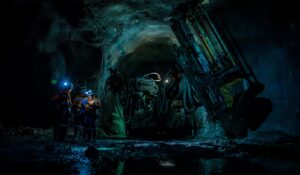
Byrnecut, one of the world’s largest mining contractors, currently working at 30 underground hard-rock mines in Australia and offshore, is spending circa-A$350 million a year on capex to keep a huge equipment fleet in tip-top order.
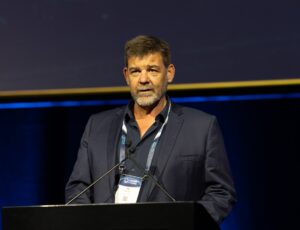 Boniwell (left) said increasingly advanced underground mine communication networks and tools that were as “important to us in underground mining as power, air and water”, as an enabler of all modern asset control and monitoring systems, were hardly ubiquitous. “Communications … is a key enabler,” he said. “It’s also historically been the single biggest handbrake to us deploying the latest in automation technology, data communications, control systems and the like, not because the technology didn’t exist but [due to not] being able to get people to understand the importance of it and therefore invest in projects.
“Simply put, if you’re not working with circa sort of gigabyte [per second] data transfer capability in your main corridor, being your decline, and stepping that out to 100-to-200 megabytes in your levels, you will not be able to use and optimise the latest automation technology, scanning systems, video feeds, and all of the other good stuff that we can do. In other words, you won’t be able to utilise your resources, plant and human, to their maximum potential.”
Ditto for electric-drive trucks and loaders that were usurping mechanical-drive units. Boniwell said the electric drive vehicle was far more efficient at transferring kilowatts from the energy source to the road, which was why, “with all other things being equal, we see productivity gains of … 10-to-30% for loaders … and 25-to-30% for trucking”.
“Some of you might not think that’s much but we’ve got 180 trucks running globally doing I can’t remember how many million-tonne-kilometres a year. You don’t need to be a mathematical genius to work out that by being able to move the dial 15-to-25% is a pretty massive commercial benefit to those operations and also to us as an operator.
“Why haven’t we got it everywhere? A little bit like the communications technology.”
Boniwell added that he thought the market emphasis – and significant OEM spending – on battery-electric vehicle development to accelerate a move away from diesel equipment “just delayed the development of electric drives”. He said he didn’t see 2030 targets for BEVs being met, either.
“That said, the electric drive and its benefits are here now.
“Suffice to say, if someone wants you to build the mine of the future and asks how you’re going to do it, you’re going to do it with the best available technology today whilst ensuring you have the capacity for tomorrow’s technology.
“You can’t build it with something that doesn’t exist yet.”
Falcon flies low over Yorke Peninsula
Still in Adelaide at Copper to the World and Rex Minerals chief geologist Lachlan Cole was quietly excited about results of the company’s recent airborne gravity survey on the state’s Yorke Peninsula.
Rex, acquired by Indonesian billionaire Anthoni Salim via Mach Metals Australia in 2024, is advancing development of a $850 million copper-gold mine at Hillside where it previously drilled out a mineral resource containing an estimated 1.9 million tonnes of copper and 1.5 million ounces of gold. A modest-sized mine gets Mach and Rex into the South Australia copper arena, but a major focus will be further exploration of the southern end of the eastern Gawler Craton domain that hosts Olympic Dam, Carrapateena and Prominent Hill to the north. The Yorke Peninsula is also home to SA’s historically rich Moonta copper mining district.
Covered in farmland, it is a place where it pays to have a really good idea where and why you want to drill before going to the trouble. “There are thousands of landowners so trying to get on the ground and take ground measurements at a decent spacing is extremely difficult,” Cole said.
Hence, all manner of non-invasive surveying is in play.
High-resolution gravity data was a missing piece of Rex’s subsurface picture.
“Traditionally, gravity was ground gravity and airborne gravity was good as a regional tool, but not ideal,” Cole said.
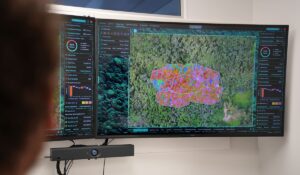
“So we worked with Xcalibur Smart Mapping and have recently flown a Falcon airborne gravity gradiometer survey. We went with the highest resolution survey possible … so 200m spacing at 80m over the ground at all times. And we flew 16,500km.
“We started in late July this year, after some delays, and then finished only about a week ago.
“The Falcon gradiometer was originally developed by Lockheed Martin for submarine navigation. Once that got released BHP took it out in the 1990s and developed it for mineral and oil and gas exploration. It’s full tensor gravity gradient data that we receive and it measures a gravity gradient. It measures the difference in gravity in the gravity field or the slope of the gravity between one point to another.
“It’s different to traditional gravity. When you fly in an aircraft and take a gravity measurement the aircraft’s bouncing. That’s going to affect the gravity. It’s hard to get rid of that noise. You can, but you lose a lot of subtlety.
“What the gradiometry gives us is really subtle contrast between density, which gives geology, stratigraphy, structure – which is really key.
“And one of the other points we made when selling this idea to our board to get funding was that if it does replicate traditional gravity, you have a derived gravity field and so if there is a Prominent Hill-style hematite IOCG sitting out on the peninsula, this will find it.”
Warned by a geophysicist not to get too excited by the raw data he’s seen, Cole said he should have polished results in about one month.
Xcalibur says it only operates six of the FALCON systems globally, on fixed-wing and helicopter platforms. The York Peninsula survey could raise demand for the technology.
About Picks, Shovels & Robots: “When everybody is digging for gold it’s good to be in the pick and shovel business”. In the 1800s thousands rushed to California – and other parts of the world – to find gold. Most miners went broke or didn’t survive. Merchants who sold shovels, pans, denim pants and staples made a fortune. Some of the technology has changed but suppliers of essential prospecting and mining tools and services have never been more in vogue.