Turner Caldwell will rub shoulders with some miners in Tampere, Finland, this week.
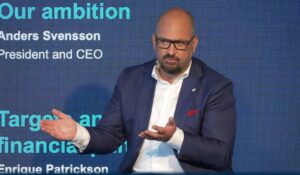
The former Tesla wunderkind who recently led “software-first” newcomer to the mining business, Mariana Minerals, to a US$310 million equity raise at a circa-$1.5 billion valuation, will join the likes of Freeport’s Paul Meisburger, experienced Boliden mine manager Miika Miettinen, Australian master of raiseboring Dave Kilkenny and Elliot Carrillo, who has spearheaded Torex Gold’s impressive expansion of Media Luna in Mexico, as presenter at Sandvik’s “Future of Mining 2026” global customer event.
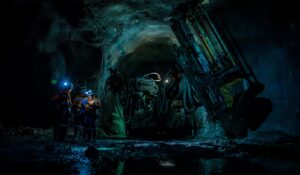
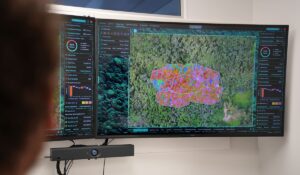
Swedish mining equipment manufacturer Sandvik is a supplier to Mariana’s Copper One operation in southeastern Utah, the first piece of CEO Caldwell’s vision of a portfolio of mines run mainly by autonomous machines and the company’s AI-driven operating systems. Sun Microsystems co-founder and Silicon Valley fund manager Vinod Khosla led Mariana’s funding round and has “backed them from day one” because, he says, Stanford University alumnus Caldwell “is the kind of operator who can actually build and run AI-driven mines and refineries, faster and cleaner than anyone thought possible”.
More than half Sandvik’s $12 billion-plus-a-year business is mining and mineral processing equipment and that now includes a sizeable software and sensor tech component after a string of acquisitions over the past decade.
Its main mining OEM peers have also gone down the bits and atoms road, seeing AI and robots reshaping primary aftermarket revenue and profit streams in the decade ahead.
The intersection of traditional earthmoving and the vast US tech-funding ecosystem – and let’s not forget China is in this race, too (see below) – was referenced by Caterpillar boss Joe Creed at a Las Vegas Consumer Electronics Show (CES) earlier this year. Epiroc, Komatsu, Hitachi, Volvo and others are going stride for stride.
Sandvik says its Tampere gathering “brings together global mining leaders for a forward-looking dialogue on the future of our industry”. AngloGold Ashanti, ArcelorMittal, Barrick, Boliden, Byrnecut, Eldorado Gold, Freeport and Rio Tinto are among the big miners and contractors represented.
“Together we will explore electrification, automation, digitalisation, real-world implementation challenges, change management and the strategic decisions shaping the next decade of mining,” Sandvik says. “This is more than a conference – it’s an exclusive leadership forum for those defining the future of the industry.”
How big a part companies such as Mariana, EnergyX, KoBold Metals and others can play in that future remains to be seen. “Tesla is unique … Being willing to make big bets, regardless of how daunting the technical challenge, is how you achieve impact at scale,” Caldwell says of Mariana’s leap-first approach.
The conversation is only going to get louder.
“It almost feels like we are reaching a time where tech investors have chased the supply chain so far down the rabbit hole they discovered mining,” says Canadian geologist and company founder, Darcy Vis. “They started in software, then hardware, then manufacturing and now they are hitting the raw resources. I guess it makes sense. You chase to fix the bottlenecks and all roads lead to resource extraction.
“A word of warning to these new groups though: always talk to the old miners and explorers. We have been here a long time and can help solve many challenges.
“Cash and intelligence are poor substitutes for experience.”
Mining company starter and regular swimmer in the industry’s traditional capital pool, Craig Foggo, sees an element of “it not being what you know but who you know” in Caldwell’s Mariana coup.
“He knows west coast tech capital. Capital pools for specialised natural resources pale in comparison,” he says.
San Fran Bay Area company founder Cody Zazulak, CEO of 4Point AI, had a warning: “This will keep happening and more and more money will flow out of traditional mining for these mining-tech deals, leaving nothing left for the jaded who didn’t adapt.”
Nick Carter, founder of London-based Acquire International, had a rejoinder: “Or they burn through the cash, are unable to develop and operate complex mines to deliver positive cash flow and the jaded companies with deep pockets and strong cash flow buy the assets – and the tech – for cents on the dollar.
“I don’t know what the future holds, no doubt AI is a positive, but let’s not forget who won out of the tortoise and the hare.”
Rabbit holes, hares and tortoises all matter here. “We often hear people lamenting the slow adoption of technology in mining,” says Colorado geological consulting company founder, Timothy MacIntyre. “Now it seems like Mariana and others have found a way to change the narrative and get an injection of capital. Exciting times!”
Caldwell himself says Mariana aims to “go as fast as possible”.
“The ambition is to go and chase as many critical minerals as we can bring to market,” he said this month.
“The plan is 10 mines in 10 years; 10 mines and refineries. We’re starting with lithium and copper but we’re going to be diversifying into uranium, rare earths, nickel, cobalt, manganese, magnesium … and doing as much of that domestically as we can before expanding overseas.
“We’re starting out with smaller assets the major incumbents aren’t really looking at because the way they have reduced costs for the last few decades has been though scale.
“And we’re trying to break that scale dependency with autonomy. And if you break away from having to deploy $5 billion or $10 billion capex you can bring a whole bunch of assets online that would not have been cost-effective to bring online without a major focus on reducing operating costs.”
Blind boring
In a similar vein, Jamie Strauss, the founder of London-based Digbee who is now a senior mining adviser for Mexico corporate advisory firm Miranda Partners, says former Uber boss Travis Kalanick’s massive $1.7 billion Atoms equity raise marks a seismic shift in mining-tech funding that didn’t cause enough of a stir in mining circles. California-based Atoms has a big mining autonomy focus.
“Almost nobody in our sector saw it,” Strauss says of an equity raise backed by Andreessen Horowitz.
“The mining press barely covered it. We are the industry being invested in and we missed our own headline.
“Ask why he would touch a two trillion-dollar sector when he’s used to markets many times that size … I think the answer is that mining sits underneath all of it. AI, power, the energy transition [and] defence: nothing gets built without what we take out of the ground.
“And he is walking straight at the problem we have failed to solve for 20 years: the skills shortage.
“Not with graduate schemes. With autonomy and robotics, funded at a scale we have never had access to. This is capital arriving from a direction we weren’t watching. It changes the technology, the talent pipeline and the momentum.
“For 30 years this sector has been treated as irrelevant. That is ending. The companies paying attention will be the ones the money finds first.”
Strauss recently observed mining’s biggest “wow moment” could be just around the corner. He said a sector starved of capital, overlooked by institutions and operating under largely unchanged rules was “about to become critical to a multi-trillion-dollar race for AI, energy and infrastructure”. New capital wouldn’t just fund projects, it would “change how mining companies are financed, governed, benchmarked and valued”.
Strauss said mining’s “rebuild” would be structural rather than cyclical.
“It’s arriving faster than I expected,” he now says.
Eacon-omies of scale
“Hong Kong gives us the platform. Australia provides the proof. Our partners provide the ecosystem. Together, we will take Eacon’s mining autonomy technology to more sites, more markets and more customers around the world.”
That was the declaration from Eacon Group Co’s head of capital markets, Yudong Liu, at a Perth event held to mark the Chinese company’s graduation into a circa-$1.5 billion public company (after its recent HK listing), deployment of “more than 3400 autonomous mining trucks”, mainly in China, and consolidation in the all-important Western Australian market, where Eacon is working with Zijin Mining unit Norton Gold Fields and the world’s largest surface mining contractor, Thiess.
Thiess assets and autonomy group executive Ryan Kirkwood (right) told the gathering the two companies were “committed to exploring future opportunities together”.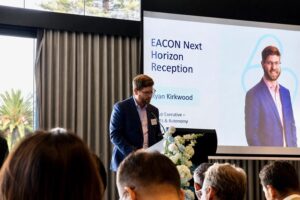
Decades of significant Chinese investment in WA’s iron ore industry and other parts of the mining sector have paved a vital two-way street for tech companies such as Eacon to access a mine-autonomy market dominated to date by Komatsu, Caterpillar, et al traditum.
The “ecosystem” is growing, too. Eacon officials told the gathering they’d inked an MoU with emerging Chinese mining machinery heavyweight XCMG to “deepen cooperation on autonomous mining solutions”. They said more than 260 XCMG trucks were already operating with Eacon’s ORCASTRA autonomous driving system and a further 100 or so were being fitted out.
So the MoU seems superfluous.
Nevertheless, the two companies say they will now explore a “faster and more integrated pathway to autonomy for mining customers in Australia and other international markets”.
Australia’s Regal Partners, which had more than A$21 billion under management at the end of June this year, dipped a proverbial big toe in the water when it cornerstoned Eacon’s Hong Kong IPO. It has invested in mining tech and services firms such as Chrysos Corporation and Perenti, but Eacon represents something new.
“What stood out to us about Eacon was the combination of real-world scale, technological differentiation and commercial traction,” chief investment officer – Asia, Zac Corones, said in Perth.
“Eacon had already moved beyond pilot stage into repeatable, production-scale deployment – exactly the profile we look for.”
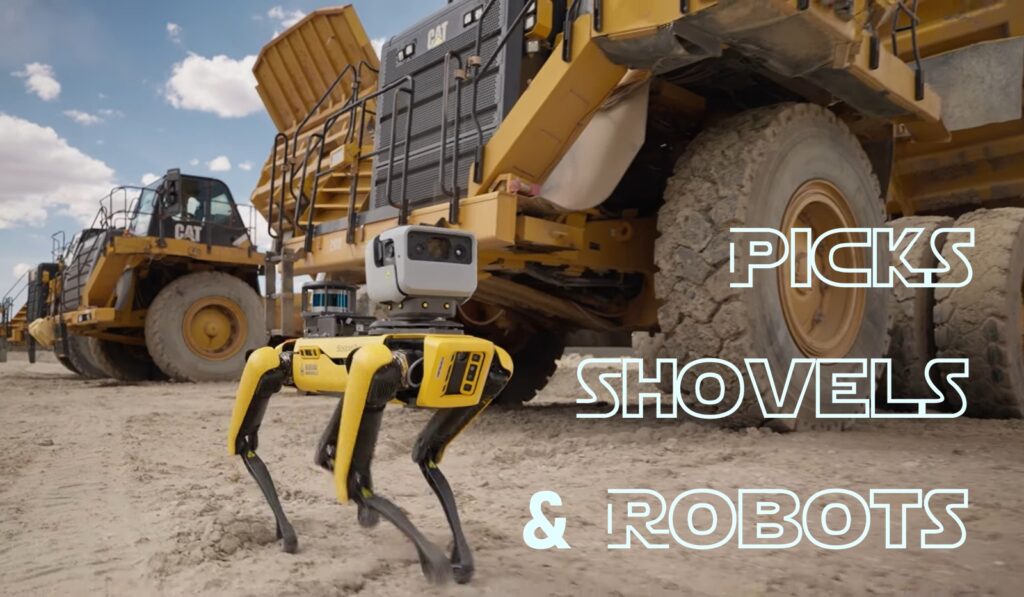
About Picks, Shovels & Robots: “When everybody is digging for gold it’s good to be in the pick and shovel business”. In the 1800s thousands rushed to California – and other parts of the world – to find gold. Most miners went broke or didn’t survive. Merchants who sold shovels, pans, denim pants and staples made a fortune. Some of the technology has changed but suppliers of essential prospecting and mining tools and services have never been more in vogue.