“AI and autonomous labs are the next frontier in critical mineral processing,” New York-based Riven Systems co-founder Dr Orion Archer Cohen said with this week’s news of a rare earth processing collaboration with French quantum computing pioneer Pasqal and USA Rare Earth.
Riven, a start-up which came out of stealth last month with a US$7.9 million seed funding led by New York VC Cerberus Ventures, is working with Pasqal to find new separation molecules that bind more effectively to rare earths. The molecules could help unlock more compact and efficient and less energy-intensive separation of mixed RE carbonate.
Global rare earth processing and metallisation is dominated by China, which has restricted exports of foundational industrial materials.
“The key challenge the rare earth industry outside Asia faces is to separate the mixed rare earth carbonate [MREC] produced in upstream operations into individual, separated oxides,” said Alex Moyes, senior vice president of upstream at USA Rare Earth, which will provide rare earth feed from its Round Top mine in Texas as well as third-party MREC and recycled magnet swarf.
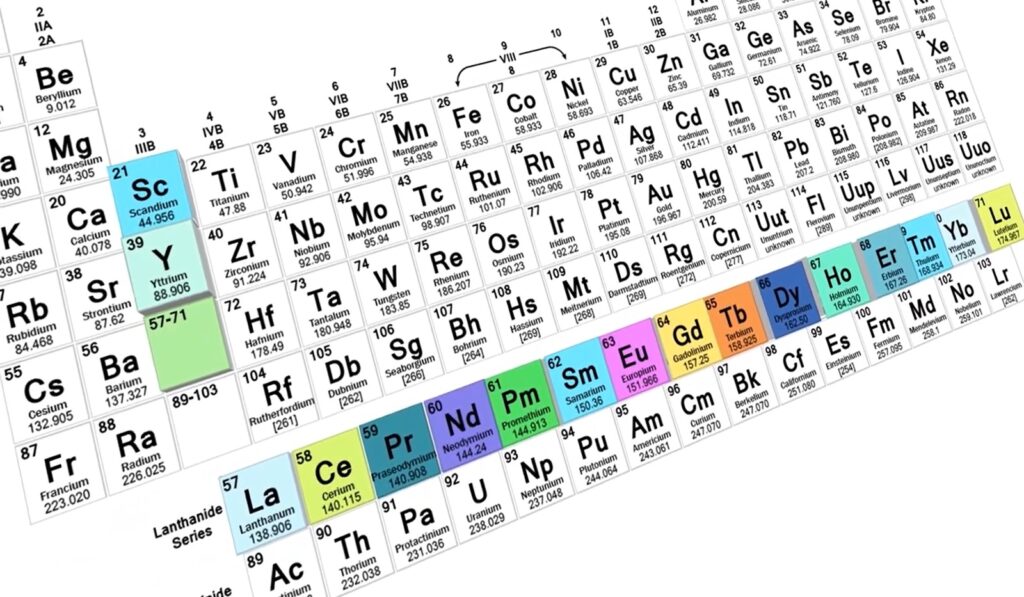
“The Chinese dominate this capability, especially for vital heavy rare earths such as dysprosium, terbium and yttrium.
“Our goal is to accelerate the path to efficient, competitive and sustainable solutions by changing how the rare earth industry discovers the chemistry it runs on.
“This strategic partnership will institute an innovative discovery pipeline where new extractant molecules are identified and tested virtually, powered by a quantum machine learning model trained on real chemical data from an autonomous lab. Rapid discovery of an extractant built and optimised for USA Rare Earth’s flowsheets could improve our capital and operating efficiency by reducing stage count, equipment needs and raw material consumption, while lowering the carbon footprint and environmental impact of our facilities.
“Breakthroughs like these are what could help make a Western rare earth value chain possible and accelerate our journey to being competitive on the world stage.”
Riven aims to play a key role in building a competitive, US-led alternative to China’s critical minerals supply chain by integrating autonomous laboratories, computational modelling and AI to rapidly de-risk processing chemistry for domestic producers.
“Today’s critical minerals bottleneck is ultimately a chemistry problem,” Riven co-founder and CEO Kurt (Chip) Breitenkamp said when the company launched last month.
“Ores and feedstocks have changed over time but legacy industrial chemistry hasn’t.
“By leveraging America’s lead in AI to identify new chemical extractants and optimise existing facilities Riven will accelerate mineral processing deployment for domestic miners in the near term and, over the long term, build a chemistry platform capable of scaling across industries.”
Nasdaq-listed Pasqal’s CEO, Wasiq Bokhari said the partnership brought together three companies working at the forefront of technologies that were increasingly important to economic growth, industrial competitiveness and national resilience.
“Rare earth materials are essential and improving how they are processed has implications far beyond a single industry.
“By combining Pasqal’s quantum computing capabilities with USA Rare Earth’s materials expertise and Riven’s advanced automation platform we have an opportunity to accelerate innovation while demonstrating how French and American companies can work together to strengthen critical supply chains.”
Pasqal has raised more than $500 million of equity funding and deployed its neutral-atom quantum computing systems in France, Italy, Saudi Arabia and Canada.