Canadian explorer Power Metallic Mines believes the mineralogy and stratigraphy of the Nisk polymetallic prospect in north-west Quebec make it an “exceptional target” for muon tomography, which could add vital insight to its search for another high-grade Lion discovery or extension.
Nisk, in the Bande du Lac des Montagnes volcano-sedimentary basin in Quebec’s James Bay district, is a nickel, copper, cobalt and platinum group element play that has been hit with a lot of geophysics over the years as well as drilling going back to Inco’s early work in the 1960s.
Power Metallic expects to put out a maiden resource estimate for the 2024 Lion copper-nickel-PGM find mid-year.
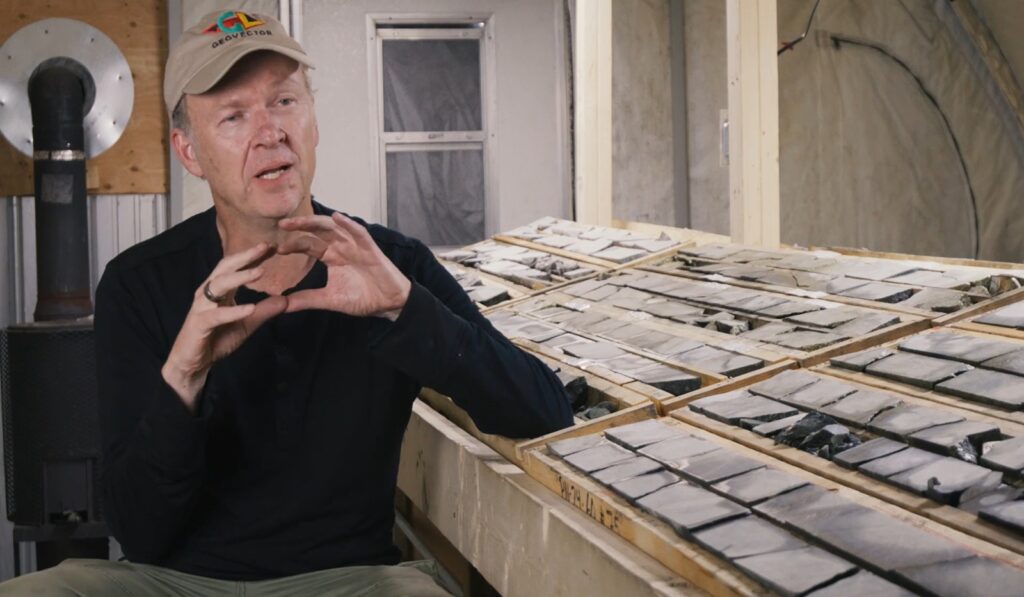
Respected geoscientist and company director Steve Beresford says muon sensors and imaging technology from Vancouver-based Ideon Technologies will be used to generate a high-resolution, 3D density model of the rock composition in and around the Lion deposit and especially at depth.
Ideon would scan about 55 million cubic metres of rock at Nisk to build its model. The density model would be validated against Power Metallic’s existing 100-plus drill-hole Lion dataset and then a calibrated mineralisation fingerprint could be used to rank and test targets across the 330sq.km Nisk property below about 200m.
“By producing an unconstrained muon inversion and then comparing it directly against the known resource model the company will establish the geophysical fingerprint of a Lion-style polymetallic massive sulphide system,” Power Metallic said.
“Once the density signature of Lion mineralisation is confirmed to match the tomographic model that calibrated signature will become the search template for the broader Nisk project district.”
Beresford, who joined Power Metallic’s board in mid-2024, said the Lion deposit’s high-grade core was dominated by massive to brecciated chalcopyrite, cubanite, pyrrhotite, pentlandite and pyrite, all minerals with bulk densities of 4-to-5 or more grams per cubic centimetre. These contrasted sharply with the surrounding felsic, mafic and ultramafic host rocks, with background densities of 2.8-3g/cc.
Ideon’s technology would be used to produce 3D density models of individual dipping stratigraphic horizons and potential extensions of the deposit at multi-metre scale resolution.
“One of the challenges in exploring any deposit is false positives,” Beresford said this week.
“Borehole EM continues to be the gold standard but increasingly we are looking to combine it with other techniques that can image thicker mineralisation.
“We are excited to integrate our current best practice workflow with muon tomography, a technique that’s demonstrated it can discover thicker intersections of sulphides. By incorporating an additional physical property beyond BHEM, we aim to improve our probability of target success and better discriminate high-quality conductors.
“We are always striving to discover better ore, not just more ore.”
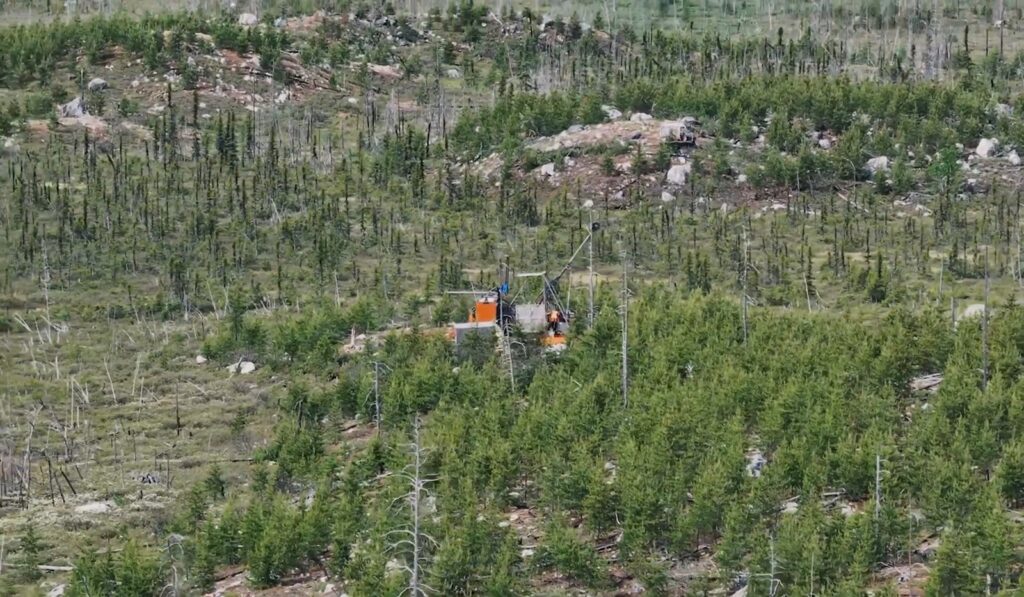
The Nisk program will initially deploy borehole muon detectors into dedicated Lion zone drill holes with the imaging running autonomously and passively to continuously collect data over several months. Power Metallic says no constraining data other than surface topography will be provided for the initial blind phase.
Ideon says its REVEAL Platform detects naturally occurring subatomic cosmic-ray muons that lose energy progressively in direct proportion to the density of material they pass through. Positioning muon detectors in boreholes at varying depths allows the company to build 3D tomographic models of subsurface density over millions of cubic metres of earth, which it says could mean hundreds of drill-holes are not needed and subsurface visibility could be enhanced at a fraction of the cost and time, and with much less environmental impact.
Power Metallic says airborne magnetics, ground gravity and airborne EM have been effective screening tools for targets shallower than circa-200m depth. However, its c330sq.km project area and 50km of strike along basin margins have already thrown up deeper polymetallic mineralisation signals.
“Once a validated muon signature of Lion mineralisation is in hand Power Metallic intends to conduct phased muon surveys across priority targets within this district, applying the calibrated density fingerprint of its known deposit type to rank and test anomalies that otherwise would have to be evaluated with blind drilling,” the company said.
Power Metallic has a circa-C$350 million market capitalisation at its current $1.50/share, which is up about 18% in the past month.